
 Interest in food (and beverages) exploded in the late 20th century because the artisanal, farm-to-table, locavore, slow-food ethos of the food world is an antidote to the globalized, time-compressed, impersonal, highly-administered, constantly disrupted corporate world in which most of us work. The romance of food and wine was an escape from that world.
The digital revolution was part of this world of post-industrial capitalism—the loss of a sense of the local, the hands-on, and the face-to-face was accelerated when all of visual and auditory experience could be translated into bits of digital information instantly transmitted around the world and accessible to anyone with a computer. The fields of music, journalism, publishing, photography, finance, and education have all been radically transformed, for better or worse.
And now with the AI revolution a reality, the predations of a post-human world are becoming all to apparent with predictions that most of us will become economically irrelevant.
So it is comforting to know there is one area of life that is relatively immune to AI —food and the world of taste.
In a world consumed by digital reproductions of questionable value (sometimes referred to as “slop”) that which cannot be digitally reproduced becomes more valuable. AI can produce images of food and can explain what food tastes like based on human reports but it can’t actually taste that food. (It can analyze its flavor properties but that is not equivalent to tasting it.)
That makes food and beverages distinct from other cultural artifacts. You can access books, songs, or photographs through your computer. But food and beverages not so much.
Food may be the last frontier that resists transformation into digital code, the last reminder of what life on earth was like before the singularity. It supplies a deep need people have for real geographical connections and work that engages all the senses.
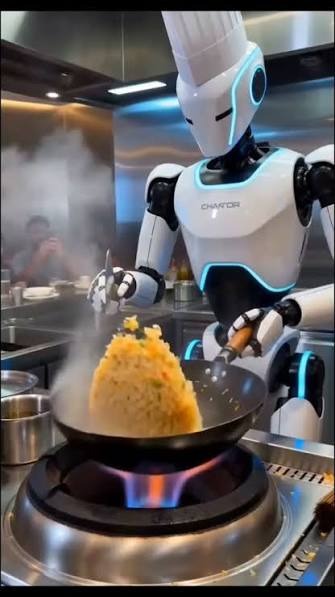
But AI raises an additional question. It cannot eat our food but it will eventually make it for us.
Will we care if a machine makes our food?
For most of what we buy, we don’t care about how it was made. We’re interested in the final product. Some food is like that. When the day comes, I suspect most of us won’t care if fast food is made by machines if they can do it faster, cheaper, safer, and better than humans can.
But what about home cooked meals? Would you prefer a family member made the meals even if the machine can do it faster, cheaper, safer, and better?
It probably depends on the cook and the budget and time constraints. But I suspect home cooked meals made by humans will maintain some value even when your AI agent-team can make them faster and cheaper. Because the value of home cooked meals is bound up with expressions of care, and that personal touch and idiosyncratic results that attentive cooks bring to a meal cannot be replicated by the machine regardless of its skill level. Whatever it does, it will not be an expression of care.
Cooking is about human connection. It matters that a particular person made the meal. I suspect we will crave that even more as the bots take over, and this will apply to some restaurant meals as well.
What about wine? Do you want your wine made by humans. I do, at least I want human judgement to play a role in what a wine tastes like. The idiosyncratic variation that comes from various winemaking practices and a winemaker’s sensibility is part of what makes wine interesting. I think we will crave that as well, although of course commodity wines will eventually be made by bots.
I suspect that artisanal cultures generally will survive the age of AI, although it is hard to say at what scale.

