
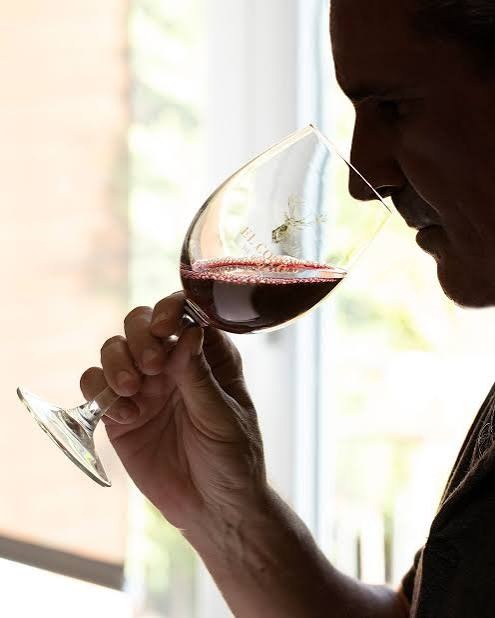
 One of the odd pleasures of wine occurs when an aroma seems familiar but cannot be clearly identified. You take a whiff and catch something. You think you know it. But then it shifts. The familiar tasting terms come to mind: dried cherry, cedar, clay, anise. None of them quite gets it. Whatever held your attention was already there before you started looking for a way to describe it.
We tend to describe wine pleasure through intensity. A wine is powerful, concentrated, explosive, or persistent. This language favors sensations that announce themselves and can be ranked. One wine has more fruit, more tannin, a longer finish. Yet much of wine’s appeal takes place at a lower volume. A faint resemblance can matter more than a blast of flavor. A mature Bordeaux, for instance, may smell like a room in an old house. Perhaps “cedar” appears in the tasting note, but cedar is only the nearest available word. The aroma doesn’t bring back a particular room you inhabited. It brushes against the memory of such a room: dim light, wood rafters, a still evening. The recognition remains incomplete, which is why we keep returning to the glass. Sometimes all you recall is a mood like the atmosphere of a day whose events have long since disappeared.
Wines also recall other wines. Anyone who has tasted seriously for a long time carries around an unruly collection of wine memories, most of which can no longer be retrieved on demand. A young Barolo may bring to mind one tasted years ago, though the producer and vintage are forgotten. The resemblance may have little to do with rose petals or tar. It could lie in the way the tannins tighten and then slowly release, or acid produces in a sudden lift near the finish.
Memory is a poor archivist, but that may be part of its value in tasting. We do not pull an earlier wine from memory storage and compare it with the present one. The memory has already been thinned out, mixed with later experiences, and has become detached from many of its original details. When a new wine touches that trace, it changes it. Perhaps only now do we recognize what was distinctive about the earlier bottle. We thought it was the flavor. It may have been the wine’s pacing, or the peculiar tension between austerity and warmth.
Place enters our memory in much the same way. An herbal red might evoke a walk through dry brush, though no wine was involved in that walk. The smell of earth after rain can migrate into the experience of a Cabernet Franc. And sometimes the connection runs through the circumstances of drinking like the noise of a crowded table or a particular voice whose owner you can’t quite place.
This doesn’t mean that memory simply imposes private associations on an otherwise neutral wine. The wine supplies the prompt. Its aromas, textures, and temporal shape make some paths through memory available while leaving others closed. But what happens next depends on the taster’s history. Two people can attend closely to the same wine and find themselves pulled toward quite different regions of experience.
It might seem reassuring if we could somehow achieve complete recognition of what a wine offers. But complete recognition can interrupt attention. Once the aroma has been securely filed under blackberry or tobacco, there may be little reason to linger.
Perhaps the most accurate response to some wines is also the least satisfactory tasting note: I have been somewhere near this before. I just can’t remember where.


Although I am an utter amateur, or maybe because I am such, so much of wine appreciation for me is around subtle, fleeting, sensory experiences that are evocative but escape being named. I’m not especially good at “name that fruit,” but I love the experience of drinking wine: it does rewards attention (as you have posited time and agin). I used to be the “wine guy” in my circle of friends, but I don’t talk much about wine anymore. I just sit with it quietly now. And so I find your statement on memory to be beautiful and the closest thing to my experience I have ever seen put into writing:
“The aroma doesn’t bring back a particular room you inhabited. It brushes against the memory of such a room: dim light, wood rafters, a still evening. The recognition remains incomplete, which is why we keep returning to the glass. Sometimes all you recall is a mood like the atmosphere of a day whose events have long since disappeared.”
This. Exactly. There is something in a well made Rioja that brings me to my grandmother’s sewing closet; “dusty tannins” doesn’t come close. It’s the prompting of a glimmer of something deep, powerful yet incomplete. This is where my wine appreciation has gone. You puts words to it. Thank you.
And this:
“Memory is a poor archivist, but that may be part of its value in tasting. We do not pull an earlier wine from memory storage and compare it with the present one. The memory has already been thinned out, mixed with later experiences, and has become detached from many of its original details. When a new wine touches that trace, it changes it. Perhaps only now do we recognize what was distinctive about the earlier bottle. We thought it was the flavor.”
Dwight, this post is particularly poetic. Memory thinned out, mixed with later experience, detached from original details, new traces, delayed recognition . As with wine, so with life.