
 Wine culture loves authenticity.
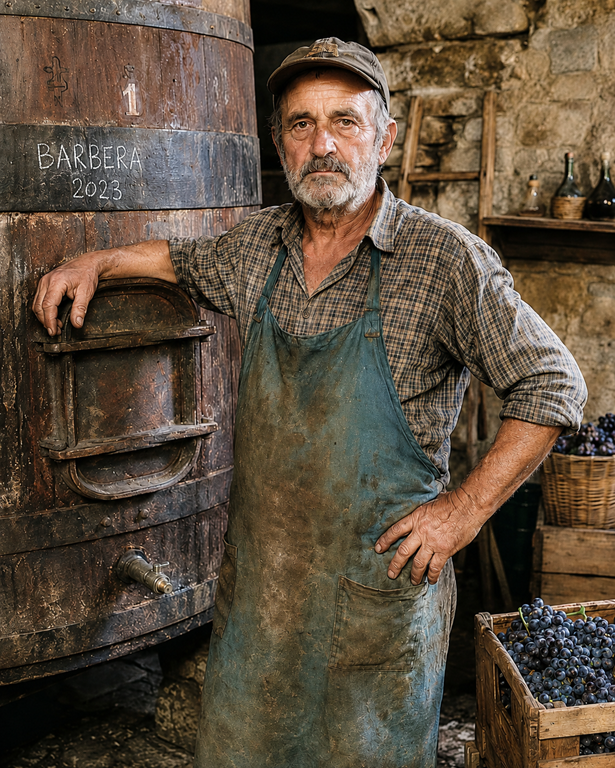
The word appears (or is implied) everywhere. We find it in natural wine, where authenticity means minimal intervention. We find it in terroir talk, where authenticity means fidelity to place. We find it in estate bottling, indigenous grapes, orange wine, amphorae, old vines, family farms, horse-plowed vineyards, and labels with goats, monks, or someone’s great-grandfather standing by a barrel looking severe.
The concept does a lot of work.
Sometimes authenticity means historical continuity: this is how wine was made before stainless steel, lab yeast, enzymes, micro-oxygenation, and consultants came on the scene. Sometimes it means local identity: this grape belongs here. It speaks the local dialect. Sometimes it means small-scale production, artisanal care, anti-industrial virtue, or the refusal to polish away every oddity. And sometimes it means peasant romance sold at urban prices.
The problem is that authenticity has become meaningless because it gathers too many virtues under one roof as if they all belong together.
But more importantly, authenticity on any of these meanings doesn’t guarantee quality; neither does it guarantee individuality. A wine can be historically rooted and aesthetically dull. It can be natural and chaotic. It can be made from an indigenous grape and still have nothing to say. It can be estate bottled and taste like a committee approved it.
Too often we treat authenticity as if it were an aesthetic achievement in itself. We hear that a wine is “honest,” “traditional,” “unmanipulated,” or “true to place,” and we are supposed to nod solemnly, as if the case has been made. But a wine is not good because it has the correct moral biography. We still have to taste it.
So expressiveness is a better ideal.
An expressive wine makes its materials, methods, and context sensuously intelligible. It not only comes from somewhere but allows somewhere to become perceptible. It does not merely use an old method. It shows why that method matters in the glass. It does not merely avoid manipulation. It organizes its freedom from manipulation into form, tension, movement, and character.
A skin-contact white wine is compelling when the grip of the skins, the bitterness, the aromatics, the fruit, and the oxidative notes form a pattern that could not have been achieved otherwise. Amphora does not matter because it is ancient. Lots of ancient things were terrible. Amphora matters when it changes the wine’s shape, breath, texture, and aromatic register in a way that deepens the experience.
The same is true of natural wine. Minimal intervention is a production choice rather than an aesthetic principle. It becomes aesthetically important only when it allows the wine to show something vivid that more controlling methods would have suppressed. A little volatility can lift aroma and create energy. Too much volatility can turn the wine into nail polish remover. The question is not whether the wine is natural. The question is whether its naturalness becomes expressive.
Terroir works the same way. Place is not transmitted automatically from soil to glass. Place must be interpreted through farming, harvest decisions, fermentation, aging, and the sensibility of the producer. Terroir becomes meaningful when those decisions allow the wine to reveal a distinctive relation between site, season, grape, and human judgment.
This is why authenticity can become a trap. It tempts us to stop thinking too soon. It lets us mistake origin for achievement and moral purity for depth. Of course authenticity can matter. Industrial wine often does erase difference. Standardization can make wines taste placeless, frictionless, and depressingly competent. Against that background, authenticity names a real desire for wines that resist sameness, that carry the marks of place, culture, weather, risk, and human touch.
But authenticity is valuable only when it serves individuality. And individuality becomes meaningful only when it is expressed. So talk about an honest wine if you must, but then ask what the wine makes perceptible and what tensions it organizes. Ask whether its methods become sensuous rather than merely ideological, whether its history, place, grape, and craft show up as living relations in the glass.
A wine is beautiful only when authenticity becomes expression.


Seems weird to write about authenticity and use an AI image.