
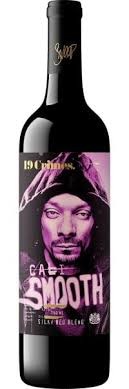
 In wine, “smooth” is a dangerous compliment.
It sounds harmless. Who could object to smooth? It’s friendly and never interrupts dinner with an opinion about volatile acidity. It’s easy to like but that is not the same as being worth remembering.
To be fair, there are wines in which smoothness is a virtue. A supple Merlot with polished tannins, a mature Rioja whose edges have softened with age, a well-made Pinot Noir that glides rather than grips. There is nothing inherently wrong with ease. Wine should give pleasure, and pleasure often begins with something ingratiating.
But when smoothness becomes the dominant ideal, wine can lose friction and contour. It loses the little obstacles that make us pay attention.
A smooth wine asks very little of us. The tannins are rounded off. The acidity is tucked in. The fruit is ripe enough to avoid sharpness, sweet enough to avoid austerity, familiar enough to avoid confusion. Oak may add vanilla, chocolate, or toast, but only in approved quantities. The whole thing is designed to avoid offense. It is wine as a good customer service agent. That can be pleasant but also boring, which is what we want from a customer service agent. But wine should reach for more.
The problem is that smoothness is often treated as if it were the same as quality. Expressiveness requires more than the absence of roughness. A wine must have something to say, and very often it says it through resistance. Acidity is resistance. Tannin is resistance. Bitterness, salinity, reduction, herbal greenness, earthy funk, and savory austerity can all be forms of resistance. These are not automatically virtues. A harsh wine is not profound because it punches you in the face. Faults are still faults when they do no work.
But when these elements are integrated, they create tension, motion, and shape. They give the wine an arc. Acidity can lift fruit out of heaviness. Tannin can slow the palate and make the finish resonate. Bitterness can prevent sweetness from becoming obvious. Herbal notes can complicate fruit. A trace of reduction can darken the wine’s mood, giving it shadow and intrigue. Savory notes can pull a wine away from mere prettiness and toward character.
This is why “smooth” often feels inadequate as praise. It tells us the wine is free of difficulties. But free of difficulties is not necessarily interesting.
Great wine composes with friction. It gives pleasure through tension. In this respect, wine resembles music. Dissonance is not noise when it belongs in the musical composition. It creates expectation, pressure and release. A song made only of consonance can become dull very quickly, even when every note is “pretty.” The same is true of wine. A wine with no edge, no interruption, no modulation, no internal drama may be easy to drink, but ease is not the summit of aesthetic experience.
Many contemporary wines seem engineered to reduce the possibility of surprise. The fruit is generous. The mouthfeel is plush. The finish is clean. Nothing sticks out. Nothing asks to be interpreted. These wines are not failures in any simple technical sense. In fact, they are often technically impressive. But they are polished into anonymity.
There is an entire market built around wines that promise not to disturb you. And that is understandable. People are tired. Dinner is late. Nobody wants a lecture from a bottle of Syrah. But if wine is to remain interesting, it cannot become merely an alcoholic blanket.
The most expressive wines are not always the easiest wines. They may have angles. They may begin awkwardly and then gather themselves. They may smell of herbs, rocks, smoke, flowers, leather, or the cellar door of an old barn. They may demand food or need air.
They may refuse to disclose themselves all at once. But that refusal is part of their beauty. A wine worth thinking about often gives pleasure by delaying it, complicating it, or making it arrive from an unexpected direction. Smoothness, by contrast, often shortens the journey. It gets us quickly to satisfaction and leaves us there, comfortable but underemployed.
So smoothness is not always the enemy of expressiveness. Sometimes it is one of expressiveness’s tools. A wine can be silky, flowing, and graceful without being dull. But smoothness becomes the enemy when it suppresses contrast, hides structure, and turns wine into an object of passive consumption. Rather than being satisfied with smooth, we should ask whether the texture allows the wine to unfold and give the palate something to follow?
The best wines do not always make pleasure immediate. They make us earn it with our attention, which should not be a scarce resource.

