
 Wine has always been associated with ceremony. That is part of the problem.
The wine bottle is theatrical site. You cut the capsule, pull the cork, inspect the color through glass, pour, swirl, sniff, and wait. The bottle says “this matters.” It says “perhaps we should not drink this while standing over the sink eating cold chicken.”
A can says something else.
So does a box. So does a lightweight glass bottle. And the question is not merely whether these packages preserve the wine, lower carbon emissions, reduce shipping costs, or appeal to younger drinkers. Those questions matter, of course. Alternative wine packaging is gaining attention because of sustainability pressures, convenience, cost, and younger consumers’ openness to formats beyond traditional glass. Recent industry discussions point to aluminum cans, recycled PET, paper bottles, bag-in-box, and lighter glass as important directions for wine packaging.
But does a shift in format change the aesthetic meaning of wine?
I think it does.
That does not mean wine in a can is fake wine or degraded wine. It does not mean boxed wine belongs in the basement of aesthetic judgment, somewhere between powdered cheese and scented trash bags. But format changes the ritual, and ritual changes how we pay attention. And because wine is an experience organized through expectation, occasion, gesture, tempo, and social meaning, packaging helps shape what the wine becomes for us.
The traditional glass bottle carries prestige because it slows us down. It has weight. It resists casualness. It has associations with cellars, age, craft, and the long patience of fermentation. Sometimes those associations are earned; sometimes they are not. But they influence our experience nevertheless. Researchers studying consumer perceptions note that glass still tends to be seen as the premium format, even as younger consumers show a niche interest in alternative packaging.
So glass frames wine as an object of contemplation.
It gives the wine a kind of dignity before we taste it. A heavy bottle with a deep punt and a label that says “estate” in embossed gold is often just marketing that is not supported by quality. Nevertheless, the bottle tells you how to behave. You pour more carefully. You taste more attentively. You are more likely to ask what the wine is doing rather than merely whether you want another sip.
The can changes that framing.
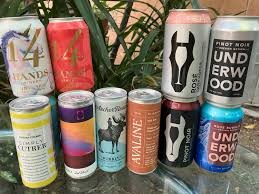
A canned wine is immediate, portable, informal. It belongs to beaches, concerts, parks, hotel rooms, and kitchen counters at 5:12 p.m. after a rough day. It invites use rather than reverence, which is why many wine people distrust it. They feel, often without saying so, that the can strips wine of aura.
Maybe it does. But perhaps that is not always a loss.
The can shifts wine from ceremony to rhythm. It makes wine part of motion: walking, picnicking, talking, snacking, laughing. Its aesthetic value is not likely to be the slow unfolding of a mature Barolo over three hours. If you expect that, you are the problem, not the can. Its value lies elsewhere: freshness, chill on a hot day, brightness, portability, a democratic refusal to make the drinker genuflect before the object.
Boxed wine creates a different problem. It offends not because it fails aesthetically, but because it collapses the bottle’s preciousness. The box says: wine is available, a daily habit which does not need a grand entrance. This can be vulgar when the wine is dull, industrial, and designed mainly to lubricate indifference. But the format itself is not the villain. In fact, bag-in-box can preserve wine after opening and reduce packaging waste. Its aesthetic possibility lies in everydayness, not grandeur.
And everydayness matters in wine. A wine does not need a cork to accompany dinner with intelligence. A good boxed wine can become part of an ordinary meal, and that gives it a rhythm the formal bottle sometimes lacks. The bottle says occasion. The box says habit. The culture of wine needs both.
Paper bottles and lightweight glass add another layer because they make sustainability visible. Target’s recent paper-bottle wine launch, for example, used bottles made largely from recycled materials and promoted major reductions in weight and carbon emissions compared with traditional glass. Aldi UK has also moved toward significantly lighter glass bottles to reduce packaging weight and emissions across millions of bottles.
Here the package becomes part of the wine’s ethical and aesthetic frame. The lighter bottle asks us to reconsider why we associate weight with quality. Why should a bottle have to feel like a medieval weapon in order for the wine to be taken seriously? Heavy glass has trained us to confuse mass with meaning. It is one of the more ridiculous habits of premium wine culture, and that is saying something.
But of course sustainability alone does not confer aesthetic value. A paper bottle can lower emissions and still contain a boring wine. Ecological virtue is not flavor. The package may improve the moral context of the wine, but it does not do the wine’s aesthetic work for it.
Still, context matters. A wine in sustainable packaging can alter the mood of consumption. It can make the experience feel less burdened by excess, less tied to the old theater of luxury. That matters especially now, when wine is trying to speak to drinkers who are skeptical of pomp, alert to environmental costs, and less loyal to the old bottle-and-cork ceremony.
The danger is that the wine industry will treat alternative packaging as a marketing gimmick, another way to chase younger consumers without rethinking the experience of wine. Put mediocre wine in a can, add a bright label, talk about “vibes,” and hope nobody notices the wine is plonk . That will not save wine.
The better path is to ask what each format is good at.
Bottles are good at ceremony, aging, seriousness, and shared attention. Cans are good at immediacy, freshness, informality, and mobility. Boxes are good at continuity, economy, domestic rhythm, and everyday conviviality. Paper bottles and lightweight glass are good at forcing us to detach quality from bulk and luxury from waste. None of these formats owns wine’s meaning. Each creates a different field of expectation.
Wine is not only a set of chemical properties sealed inside a neutral container. It is a relational object. Its meaning emerges from grape variety, place, vintage, farming, cellar work, temperature, glassware, food, occasion, memory, and packaging. Change the format and you change the performance.
A can of wine does not ask us to admire it in the same way a bottle does. Good. Let it ask another question. Let it ask whether wine can be casual without becoming stupid. Let boxed wine ask whether the everyday meal deserves better than we give it. Let lightweight glass ask why we ever thought heaviness was a synonym for seriousness.
Wine does not lose dignity when it sheds the bottle
It loses dignity when it becomes dull.

