
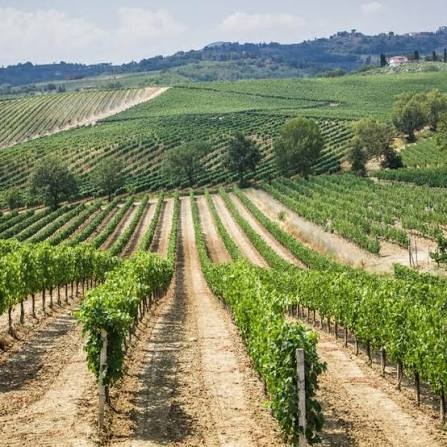
 A friend recently told me about a wine dinner he attended devoted to Montepulciano d’Abruzzo, a region in East Central Italy in the foothills of the Apennines. My first reaction was mild surprise. This is a region known for affordable table wines. Of course, there are more ambitious examples, especially from Colline Teramane DOCG. Still, a formal dinner built around Montepulciano d’Abruzzo seemed an unusual idea.
Then he mentioned the prices. Several bottles were approaching what most consumers would regard as premium territory in the $40 range.
The formula for at least some premiumization is familiar. Reduce yields. Let the grapes get riper. Extract more color and tannin. Age the wine in oak for one to three years and add $20 or more (sometimes much more) to the price. I’ve tasted some decent examples from this region some years ago. But what happens when every wine region decides its future lies upmarket?
Premiumization has become the wine industry’s standard answer to weak demand. If consumers are drinking less, producers must persuade them to spend more per bottle. But once regions begin chasing prestige, they often adopt the same signals of seriousness. More oak and greater concentration can improve thin or carelessly made wines, but they can also obscure the differences that made the region worth noticing. A Montepulciano d’Abruzzo fashioned after a polished Super Tuscan may “taste good” in some sense but does it tell us anything interesting about Abruzzo?
A good regional wine should give us some reason to understand why it tastes as it does, why it belongs where it comes from, and why we might want it instead of the hundreds of alternatives on the shelf. Oak and ripeness do not necessarily give us that.
But I am of two minds about this phenomenon. Traditional wine regions are not museums, and inexpensive table wine is not automatically authentic. Low yields, better vineyard work, more careful clonal selection, and improved winemaking can produce wines with greater precision and expressive range. Those changes cost money. Producers who make genuinely better wine should be able to charge more for it.
The problem appears when the ambition to make better wine arrives with a ready-made recipe. As usual, the proof is in the tasting. Does the extra care allow the wine to become more fully itself? Or has the region simply learned to imitate the international language of prestige?
Perhaps it’s time for me to revisit Montepulciano d’Abruzzo to find out.


It takes so much more work to produce even a small amout f the wine we granted nowadays