
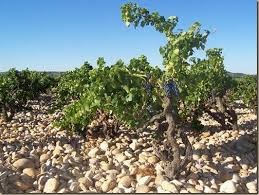
 Terroir may be the most important word in wine and also one of the least useful when left unexplained.
Some people treat terroir as an objective fact. The soil speaks. The limestone, granite, clay, fog, wind, and afternoon sun all make their way into the glass, as if the vineyard were dictating tasting notes to the winemaker. On this view, the critic’s job is to detect the message and report it faithfully.
But others roll their eyes at that story. They are skeptical that features of the soil or climate imprint themselves directly on the flavor of the wine. To them, terroir is marketing romance, a story told after the fact to raise the price of fermented grape juice.
Both views get something right and something wrong.
Terroir is not a simple flavor stamp. There is no direct pipeline from limestone to minerality. Place does not imprint itself on wine the way a boot leaves a mark in wet mud. The relation between site and flavor is far more complicated than that. Soil influences water availability, vine stress, rooting patterns, and microbial life. Weather influences acidity, sugar, phenolic development, aromatic compounds, and disease pressure. Farming decisions alter canopy, yield, exposure, and vine balance. Cellar decisions determine extraction, texture, stability, and up to a point, ageability.
By the time the wine reaches the glass, “place” has passed through a long series of mediations. Not only weather and soil but tradition, legal and economic matters, taste, and judgment have all had their say.
But that does not make terroir a fiction.
A fiction would be invented from nothing. Terroir is not nothing. Vineyards, regions and vintages differ. Grapes grown in one place do not behave exactly like grapes grown elsewhere. Anyone who has tasted carefully across producers, vintages, and neighboring sites knows this. Wine is full of recurring differences that are not easily dismissed. They may be subtle, unstable, and hard to name, but they are there.
The mistake is thinking that terroir must be either a brute sensory fact or a pretty story. It is neither. Terroir is a critical practice.
It is a disciplined way of tracking relations among site, weather, grape variety, farming, cellar choices, and sensory expression. It asks us to interpret what we taste in light of how the wine came to be. That does not mean we blindly accept every producer’s story. Tech sheets are not sacred texts. But it does mean that tasting is enriched when we understand the field of forces behind the wine.
Terroir must be interpreted because place does not express itself automatically. A vineyard provides conditions, not outcomes. The winemaker still has to decide when to pick, how much to extract, whether to ferment with whole clusters, how to manage oak, whether to filter, how long to age, and what kind of balance the wine should seek. These choices can reveal a site, blur it, exaggerate it, or erase it.
This is why “minimal intervention” does not solve the problem. Doing less is still doing something. Not correcting acidity, not adding yeast, not using new oak, not filtering, all of these are decisions. They shape the final expression of the wine. Sometimes they let place come forward. Sometimes they merely let microbial chaos take the microphone.
Terroir is therefore not opposed to human agency. It depends on it.
A good terroir wine does not eliminate the winemaker. It shows a persuasive relation between site and interpretation. It lets us perceive why this wine could not have come from just anywhere, while also showing the intelligence that allowed those conditions to influence the wine. The best examples do not taste like raw nature. They taste like nature understood, argued with, and brought into form.
This also explains why terroir talk becomes empty when it is reduced to slogans. “This wine expresses its place” is not enough. How? Through its acid structure? Its aromatic register? Its tannic shape? Its savory depth? Its restraint? Its refusal to become plush? Its way of carrying ripeness without heaviness? These are the questions that make terroir useful rather than decorative.
Terroir is not a guarantee of quality. A wine can express its place and still be dull. Some places are difficult. Some vintages are awkward. Some producers do not know what to do with what they have. But when terroir matters aesthetically, it gives wine individuality.
So we should avoid both pieties. Terroir is not the voice of the soil speaking in perfect translation. It is also not just a bedtime story for people who spend too much money on Burgundy.
It is a way of paying attention. Terroir names the effort to understand how a wine gathers place, weather, farming, and craft into a sensory form. It is not simply found in the glass. It is learned through comparison, memory, context, and criticism.
The question is not whether terroir is fact or fiction.
The question is whether our way of tasting is subtle enough to follow the relations that make place perceptible.

