
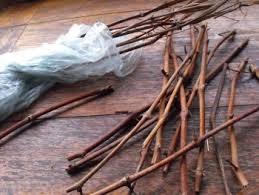
 This post at Wine Searcher entitled America’s Great Grape Variety Shortage reminds us of how much more interesting wine could be.
Of the 10,000 vine varieties in the world, 13 occupy more than one-third of all plantings, and 33 comprise about half, according to the intergovernmental research organization International Organization of Vine and Wine.
Of that 10,000 fewer than 400 can legally be grown in the US and appear on wine bottles.
The piece rightfully asks:
How is it that less than 4 percent of all grapes in the world are available for fermentation and delectation in the US – a country often characterized as the Wild West of winemaking, with no regional bodies dictating what grapes can be grown where, and harvested at what weight and aged for how long in what kind of vessels – as there commonly are in European countries?
The answer the author would like to give is bureaucracy—blame it on the Alcohol Tax and Trade Bureau (TTB) that is charged with deciding what wine grapes can be grown in the U.S. But Jason Haas of Paso Robles’ Tablas Creek, who has actually succeeded in getting nine grapes approved for that list, thinks the TTB’s caution is warranted.
“I don’t think the government is making it too hard, actually,” Haas says. “They have a legitimate interest in not spreading a disease that could wipe out a multi-billion-dollar industry. But because it’s slow and expensive, people often try to get around it, and are actually proud to say they smuggled grapes in. How many stories have you heard about suitcase clones?”
He is of course referring to phylloxera a pest that once destroyed the wine industry in Europe and remains a threat if it isn’t controlled. Any cuttings imported to the U.S must be quarantined and disinfected before getting approval. Once that approval is secured, you then have to get permission to use that variety on the wine label, a process which Haas claims takes about 6 months.
Why should we care about that other 96% of the grape world we might never taste. Hass says:
Beyond the idea that there are great grapes out there that may be better suited for a hotter and drier future, and the fact that we don’t know how they will express themselves in our California terroir until we try,” Haas says. “It’s just smart from a marketing standpoint. Consumers are super fascinated by the idea that there are grapes they’ve never tried, or never even heard of. We find in the tasting room that people get a huge kick out of trying the grapes.”
People like Hass and his tasting room visitors are fascinated by new varieties. (Me too I must confess. I’ve been known to travel several hundred miles to taste a new variety.)
But I suspect the market for new grape varieties is relatively small. If you look at sales figures, most wine drinkers are satisfied with the Cabernet, Chardonnay, Pinot Nor, Sauvignon Blanc hamster wheel. It takes time and resources to develop new grape varieties and they are a hard sell to any except the difference hounds who love wine for its variations.
Still, one can dream.
 Exploring the Philosophy of Food and Wine
All seems so obvious from a consumer perspective but now even more so in the case of the need for a resilient genetic pool to adapt to change in pressures from climate and disease.