
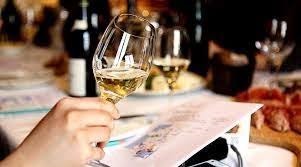
 Blind tasting, in which the taster lacks knowledge of the producer and/or price and in some cases the variety and region, is thought to be the gold-standard of wine criticism because it preserves objectivity. But some features of a wine cannot be evaluated without knowing variety and producer. You can’t evaluate whether a wine is typical of its variety or consistent with a producer’s style without knowing these facts.
Although a critic with an agenda or theory about what wines are best may be biased if tasting non-blind, blind-tasting excludes important information that users of the criticism may want to know. If you want to compare vintages or wines from different vineyard blocks or you want to assess wines made by different producers from the same vineyard you can’t be tasting blind.
In the end, whether blind tasting is useful or not depends on the purpose of the review. Consumers looking for a good value benefit if the critic is blind. But high-end collectors looking for age-ability and the track-record of a wine need reviews that are non-blind, as do consumers who want to know the story behind a wine.
Critics are not the only tasters who taste blind. Blind tasting is important for training one’s skill as a wine taster. It forces you to really concentrate on what you’re tasting because you are grasping for any scrap of information your senses give you. But I have also found that when tasting blind, I devote so much attention to trying to guess region and varietal that I focus less on quality.
As for me, when I reviewed wines on this blog, I tasted non-blind. Edible Arts considers wines as works of art. And I’ve never heard of a film, art, or music critic who evaluates works without knowing as much as they can about the object of their review. All art evaluation requires judgments about how a work compares to others in its genre, how successful it is as a manifestation of its style, what it says about trends, and most importantly what the work means and how the aesthetic features of the work contribute to its meaning. None of these judgments can be made without knowing who produced the work and what the appropriate categories are for understanding it. Knowing what the work is attempting to achieve is essential for judging whether it achieves its aim or not.
The same holds for wine. Without knowing the varietal, the region, and the producer it is hard to know what the wine is aiming for and what the flavors and textures mean. The winemaker’s vision will in part be a product of where the grapes are grown, the style in which she chooses to make the wine, etc. Whether the wine is successful or not depends on knowing those facts.
Furthermore, unlike most critics, I did not taste many wines in one day. I focused on one wine and how it evolves over the course of an evening and how it drinks the next day as well, and always in a quiet place with no distractions. Such a tasting regime mitigates some of the worries about objectivity. The more you taste a wine, the better your chances of uncovering mistaken impressions one gets from an initial tasting.
But at any rate, for my purposes, this multi-dimensionality is more important than objectivity. And that requires non-blind tasting.
 Exploring the Philosophy of Food and Wine
I prefer blind tasting myself.
In the whiskey world so much rides on the kudos of the distillery or blender that I often feel skews the results of a review.
You can find out the price/varietal/region after the blind tasting if required.