
 One reason why painting is considered to be the most important form is because, in Western civilization, genuine aesthetic appreciation has long been associated with a spectator attitude.
According to this view, the proper appreciation of beauty must not be contaminated by one’s interests or practical concerns. Art is a special realm separate from the rest of life to be appreciated only in a museum or gallery where one’s mental state is purified of any interference aside from quiet contemplation of the work.
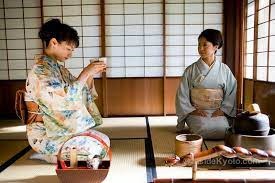
In Japan, by contrast, the realm of art includes the tea ceremony, a ritualized and aesthetically refined way of preparing and serving matcha, a powdered green tea. Although the ceremony is conducted in a tea house specifically designed for the ceremony, it is nevertheless a participatory art in which the host precisely prepares the tea and the guests follow a specific etiquette in which they show respect for the host, the utensils, and the other guests. When the tea is served, guests will admire the tea bowl and its design before taking a sip. They may make a slight bow of gratitude to the host before enjoying the tea. The ceremony is designed to enact the beauty of simplicity, hospitality, and inner peace.
It differs in many ways from the spectator attitude. The aesthetic setting is sociable and interactive. Everyone is a participant. The situation is continuous with ordinary life. Food and drink, the most basic biological necessities, form the ceremony’s core. And separation and isolation are not the pre-condition for the appreciation of beauty. The ritualized aspects of the ceremony, the landscaping, decorations, clothing, utensils, and the sensory aspects of preparing and serving tea make up a whole situation which is the art object. The relation of artist to audience becomes one of host and guests.
Wine tasting too has its rituals and settings. A room or patio designed specifically for tasting, often in a landscape designed to enhance the wine’s presence, utensils chosen carefully according to how the wine is to be displayed, a convivial atmosphere in which guests interact with hosts, and a focus on the sensory dimension of life. What is missing is the deliberate, precise performance and focus on respect exhibited by the tea ceremony participants. More importantly what is missing is the consciousness that the setting and situation constitute an art object.
Perhaps as the spectator attitude wanes in Western society we will come to see wine tasting as a participatory art form.
 Exploring the Philosophy of Food and Wine
Dwight,
Have never been to a tea tasting, but from little I know, including your detailed explanation of it, I’m not sure that a well planned and programmed wine tasting may ever deliver “the setting and situation” that results in an appreciated “participatory art form.”
However, having said that, next week we are invited to a wine tasting that is set in the St Helena hills high above Napa Valley. I expect everything to be eye catching and jaw dropping, including the three digit prices of the wines to be poured.
Cheers,
Tom