
 Joe Roberts (AKA 1WineDude) has an insightful discussion of the issue of objectivity of wine ratings. And to make his point he drags the word “qualia” into the picture.
But it’s the subjective stuff that really throws the money wrench into the works here. How we perceive those – and measure our enjoyment of them – will likely not be fully explainable in our lifetimes by science. That is because they are what is known as qualia: like happiness, depression, pain, and pleasure, those sensations can be described but cannot effectively be measured across individuals in any meaningful way scientifically.
He goes on to argue that there is no way to compare my qualia with yours, since these are thoroughly private, subjective states with no precise scale to measure them. Thus, there is no way to be sure that when a wine critic claims a wine is jammy or lacks acidity, her experience is similar to what another critic means by those terms, and assigning numerical value to such experiences is of limited value.
As far as I know, this is the first time the word “qualia” (a technical term used by philosophers and cognitive scientists to refer to subjective states) has been mentioned on a popular wine blog.
Perhaps that is a sign of progress (if in fact the use of philosophical terminology counts as progress, a debatable proposition).
At any rate, I commented on the post pointing out that most people who work in the field of cognitive science think qualia are reducible to brain states which can be measured.
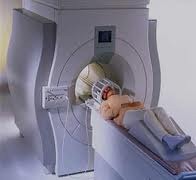
I imagine wine tastings of the future in which critics are perched on the dais helmeted by portable fMRI machines to make sure their qualia match.
 Exploring the Philosophy of Food and Wine
I guess I’m not holding my breath for this particular turning of the world spirit. And I’m with you in being worried about whether the appearance of philosophical terms of art (least of all ‘qualia’!) counts as progress. That said, it occurs to me that there has been work on reliable interpersonal comparisons of perceptual states — eg, Linda Bartoshuk has a very cool indirect method involving interpersonal comparisons between *intrapersonal* perceived intensity matches across different modalities. Obviously that’s just one measure, and all kinds of questions surround it, so it’s not as if this is the end of the story. But it’s interesting that these sorts of efforts haven’t seemed to have had a lot of uptake in popular — or even very much technical — writing about wine. Even when they are, prima facie, exactly on point. No?
Jonathan,
Thanks for the comment and especially the reference to Bartoshuk’s work which I did not know about. The wine world seems quite confused about this issue of objectivity and having an entryway into the difficult issue of interpersonal comparisons would really help.
I will check it out.
The measurability of mind states is very very crude at best. Kind’a like opening an old TV and watching which tubes are glowing. (Psych researchers love the fMRI – a definite advance – but still very crude. The analogy is exact.) The states are strongly interpreted by past experience – which differs radically across individuals.
Hoping for objectivity in taste is like hoping for uniformity in people – not necessarily a desirable goal. Recognition of subjectivity seems rather more important.
Preston,
Thanks for commenting. I agree with you about the crude technology for measuring brain states. My point was that this appears to be where the action is in assessing the value of qualia as a theoretical posit.
The issue is not “hoping for objectivity”. The aim is to understand the pratice of criticism. No doubt, wine tasting, and other forms of aesthetic evaluation, are up to a point subjective. But they cannot be entirely subjective. The claim that aesthetic appreciation is thoroughly subjective entails that the worst pour-down-the-drain plonk is no better or worse than a Chateaux Haut-Brion. (or that Hamlet is no better than your average bodice-ripper)
No one with any experience with wine or literature thinks that. Thus the assumption does not help at all to explain the practice of criticism.
We can try to discover the proper characterization of objective judgmens without destroying the undeniably subjective elements of wine tasting.
In the end, I doubt that terms “objective” or “subjective” are particularly helpful–they imply a contrast that is often misleading.