
 It has long been my view that variation is the lifeblood of wine. Without variation, wine would have no intellectual pull, no mystery, no reason to study it, and very little reason to love it beyond simple refreshment. What keeps wine alive for serious drinkers is not just pleasure but the pleasure of experiencing and understanding differences. One bottle is savory and restrained, another is floral and expansive, another changes shape by the minute in the glass. Every vintage is a little different, each vineyard, at least at quality sites, expresses differently, each varietal in skilled hands has something unique to say. As I’ve argued elsewhere, beauty in wine is bound up with “significant variation,” with the way a wine stages difference, depth, and movement rather than merely delivering generic deliciousness.
That, it seems to me, is also the key to wine’s future.
If wine is going to survive its current downturn and flourish again, the industry probably needs an updated lifestyle pitch. But more importantly, it will flourish because consumers become fascinated again by wine’s variations. Wine has to recover its power to surprise people. It has to remind them that one of the great pleasures of drinking wine is that you are never quite done learning what it can do. If every bottle feels interchangeable or is presented as interchangeable, then wine loses its reason for being more than a luxury accessory.
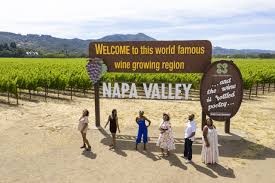
So I found Ted Hall’s recent article on Napa communication really interesting. Hall analyzed the marketing language of 512 Napa wineries using what he calls his “Napa Identity Index,” which measures the degree to which a winery’s public communication differentiates it from Napa’s dominant marketing template. A low score indicates reliance on generic regional buzzwords and interchangeable narrative structures; a high score indicates specific, verifiable, and philosophically distinctive self-presentation.
Here is what he takes to be the dominant marketing template for Napa wines:
“Since our founding, our family has been dedicated to the legacy of crafting world-class wines from our historic Napa Valley estate. We believe great wine begins in the vineyard, and our passion is expressed through sustainable farming on our unique, terroir-driven sites. Each small lot of our iconic Cabernet Sauvignon is hand-crafted with meticulous care and minimal intervention to create wines of exceptional power, elegance, and balance. These age-worthy wines are a pure expression of place. We invite you to join us for an intimate, by-appointment tasting to experience our unparalleled hospitality.”
Sounds familiar doesn’t it?
The index runs from 0 to 100, where 0 means “perfectly prototypical” and 100 means “highly unique.”
The results of his survey:
● 71% of the 512 wineries analyzed scored a 40 or below.
● 36% of the market (184 wineries) exhibited “Very Low” differentiation (scores 0-20), meaning their brand story is interchangeable with competitors due to a heavy reliance on prototypical language. They are essentially indistinguishable one from another.
● 35% of the market (180 wineries) exhibited “Low” differentiation (scores 21-40), primarily using the prototype language with only minor unique details.● Conversely, fewer than 10% of wineries (just 41 wineries) qualified as “Highly” or “Very Highly” differentiated.
So his argument is persuasive: Napa is drowning in a “sea of sameness.”
I suspect the issue is larger than Napa. Hall’s prototype winery description is painfully familiar regardless of location: family-owned estate, sustainably farmed vineyard, world-class quality, expression of place, by-appointment tasting. None of these claims is false or misleading. But the language is exhausted, like a script that producers inherit rather than a voice they earn.
I am surely no expert on marketing but my understanding is it is about differentiation. It is about giving consumers a reason to notice you, remember you, and understand why your wine stands out. If variation is what makes wine interesting, but our discourse about wine does not capture variation, then marketing loses force. Wine which is built on nuance speaks in vapid generalities.
Hall does highlight what he thinks better communication looks like. The wineries that stand out are those that make very specific claims. Spottswoode does not merely gesture toward sustainability but points to certified organic farming dating to 1985. Darioush breaks from the standard Napa inheritance story through a founder narrative shaped by Persian heritage. Corison distinguishes itself philosophically by foregrounding restraint and lower alcohol in a region associated with ripeness and opulence. The cult wines like Screaming Eagle don’t tell much of a story at all. “This deliberate “anti-marketing” communicates ultimate confidence, relying entirely on extreme scarcity and critical acclaim rather than conventional storytelling.”
These strategies give consumers something concrete and memorable to hold onto.
The wine world needs many things right now. Better pricing would help. And surely better distribution would make a difference. But it also needs a way of talking about wine that makes variation come alive, a language supple enough to register difference, precise enough to name what is singular, and vivid enough to make people curious.
Wine flourishes when its variations feel real, and when the words surrounding those variations make you want to chase them down.
 Exploring the Philosophy of Food and Wine