
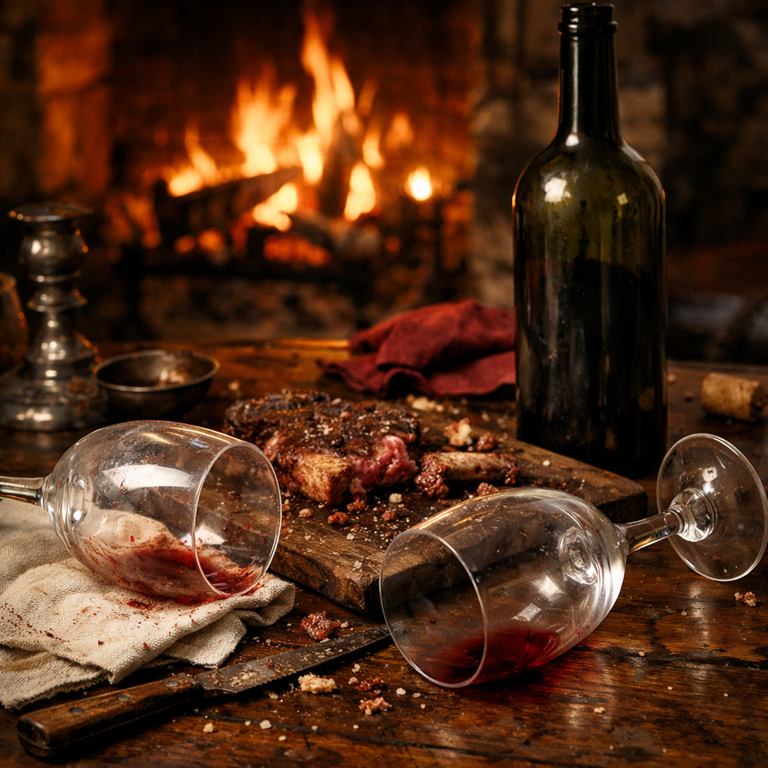
 For roughly three decades, the good life was typically pictured with a very specific image: thick-stemmed wine glasses beside marbled beef, a Tuscan stone terrace warmed by late afternoon sun or a fireplace in the evening, and a bottle of wine whose first nose arrived like warm cocoa arising from a bakery counter. Lifestyle magazines, retail displays, and steakhouse lists repeated the scene until it felt natural. Winemaking translated that image into technique—longer hang time for riper fruit, lots of new oak for toast and gloss, extended élevage and meticulous racking for satin textures, and alcohol levels that signaled power and confidence. The promise in the glass was social as much as sensory: prosperity could be tasted, and it tasted plush.
That “romance of ripeness” fit a middle-class aspiration that defined the 1990s through the late 2010s. You advanced at work; you bought the big Cabernet. The bottle was a reward and a signal. Criticism and competitions, organized around tasting flights and quick impressions, favored the style because it delivered immediately—high-aroma impact, sweetness of fruit on entry, and tannins polished to a sheen. Whites complimented that aesthetic with creaminess, sweet spice, and tropical breadth. It was luxury rendered as texture.
This was the culture in which interest in wine really took off, at least in the U.S.
The conditions that stabilized this imaginary have now thinned considerably. Younger drinkers have to manage tighter budgets, different work rhythms, and more varied cuisines. Lunch is lighter; dinner is often shared among small plates holding cuisine from less wine-centric cultures. Health talk has moved from background noise to daily habit; “sober curious” has gone mainstream. The image that once seemed like an extension of everyday aspiration now feels dated.
Producers are caught between that legacy value and emerging demand. Brands built on ripeness-as-luxury face an awkward pivot: recalibrate structure and you risk confusing loyal customers; stay the course and you lose relevance among audiences who associate pleasure with lift, digestibility, and place. Wine’s current struggle is less a failure of messaging than the fatigue of a once-compelling vision. For years we read generosity as thickness and luxury as oak. A viable path forward begins with replacing that picture.
The settings in which people now drink ask for other virtues: presence at cooler temperatures, structural clarity, sustained interest across a meal, expressive links to place, and a story about ethical responsibility.
And alternative wine styles have emerged: minerally whites for raw bars and seafood counters; reds that take a chill and pair with vegetables, grains, and spice; pétillant wines chosen for conviviality rather than prestige; site-marked bottles that function at the weeknight table without surrendering complexity. Occasions are more important then trophies, pairings more important than poses.
And so we can begin to conceptualize a new way forward. Trade the staged terrace for the table that actually gathers people. Think of wine less as a reward and more as a companion that enhances conversation and food.
The aspiration for a good life has not disappeared but the details have surely changed. I doubt there is a single aesthetic vision that can unify the wine world. And maybe that’s a good thing. But the wine industry will have to learn to live without that single vision at its back. We live in an increasingly fragmented, rapidly changing world in which the most agile will have the advantage.
 Exploring the Philosophy of Food and Wine