
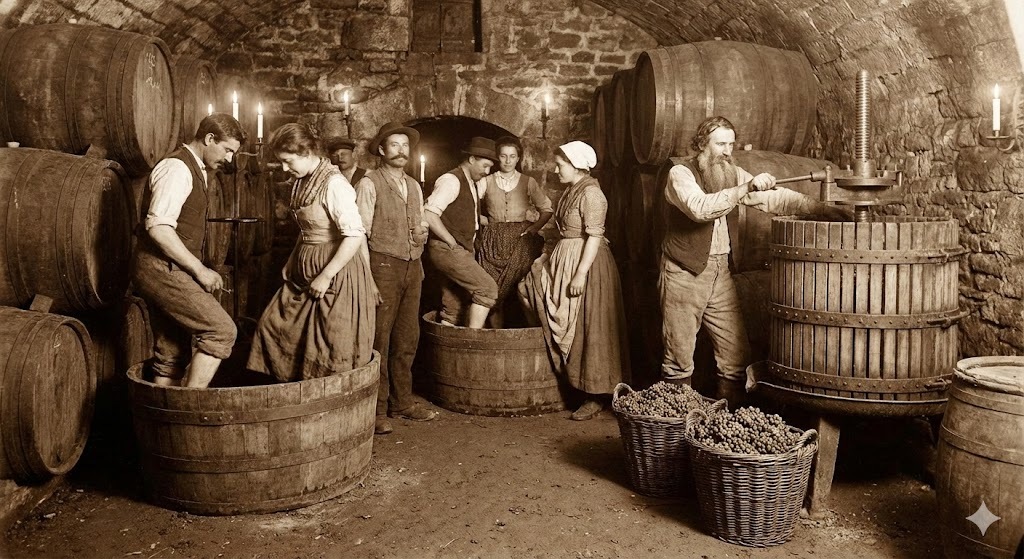
 One thing that has always fascinated me about wine is that, despite it being saturated with tradition, it is capable of substantial innovation.
The best-known brands have been around for decades if not centuries. Wine styles—red, white, orange, pink, sparkling,and fortified—are little changed from what was available 500-600 years ago. Although viticultural has changed substantially over the past 75 years, the same basic methods of winemaking are used year after year with only minor changes at the margins (at least for artisanal wines. Industrial winemaking is another matter). And regional styles, in many locations, police their boundaries with regulations designed to limit innovation unless it fits the narrow parameters of what the consensus is willing to permit.
Yet change does occur. How do new ideas arise and become accepted inside a conservative practice that valorizes continuity? What are the mechanisms that innovation depends on in the wine world?
The first is the intelligibility of the innovation. Innovations endure when they offer clear solutions to recognized problems without sacrificing identity. Consider Barolo in the late 1980s and 1990s: shorter macerations, cleaner élevage, and use of new oak were defended as solutions to excessive astringency and oxidation. Yet despite the changes, Nebbiolo’s identity was for the most part preserved. Contemporary producers now mix those techniques with gentler extractions and large neutral casks, but the original shift survived because it addressed tannin management within an aesthetic the community already possessed.
Second, is competitive pressure. In the late 20th Century, cross-regional tastings and global criticism create external benchmarks that forced local norms to change. The 1976 Judgment of Paris did more than crown specific bottles; it established comparison as an authority. Old-World estates adjusted ripeness windows and oak regimes to show well beside California counterparts, and in turn California producers pressed their competitive advantage—sunshine–to hold their own against Bordeaux and Burgundy. Later, when a segment of critics tired of that California glossy richness, counter-examples—Loire Cabernet Franc, Etna Rosso, Beaujolais cru—supplied models for recalibration.
Third, tools and training. Standardized glassware, aroma lexicons, and compound libraries professionalized tasting and taught producers to manipulate specific features of the wine. Ann Noble’s Aroma Wheel, UC Davis fault kits, and ISO glass norms focused attention on repeatable cues. The result was clearer descriptors and a shared thresholds for faults which made it easier to argue about style. Once tasters could reliably name acidity, phenolic grain, reduction, volatile acidity, or oak imprint—and agree on thresholds—producers could frame departures as targeted solutions rather than iconoclastic shots in the dark. That is, the tools made innovations conceptualizable and defensible. The rehabilitation of skin-contact whites as “orange wine” became intelligible once tasters could distinguish skin-derived phenolics from oxidation and discuss texture differences without seeing them as faults. Similarly, pét-nat’s rise depended on the ability to separate controlled bottle-fermentation haziness from excess microbial instability, giving buyers and sommeliers a shared rationale for new by-the-glass menus..
Fourth, markets and occasions. New Zealand Sauvignon Blanc and rose didn’t become popular because they appealed to tasting panels or top critics. Instead, they solved the lunchtime and patio problem: the need for light, accessible wines suitable for midday or warm weather drinking. And the popularity of brunch rewarded the emergence of the accessible, inexpensive Prosecco. When the occasions at which people drink become a stable market, wine styles adapt.
Fifth, climate change. Warmer growing seasons have forced conservative regions to innovate as a means of conservation. Burgundy’s warmer temperatures accelerated canopy adjustments and a renewed interest in whole-cluster fermentation to recover aromatic lift; Champagne’s base-wine ripeness has encouraged reserve-wine strategies and dosage reevaluation. These are not rejections of tradition but technical modifications of its aims under new constraints.
Finally, leadership at the margins. Durable change often begins as small, well-argued deviations: Gravner’s Friulian skin-contact whites reframed “white wine” as a textural category; the Jura’s oxidative styles, which were seldom appreciated outside that region, became international reference points through focused importers and bar programs; Georgian qvevri methods moved from curiosity to a widespread option as sommeliers built audiences for them. Once a niche acquires good examples and effective spokespersons change can happen rapidly.
On the surface, wine appears conservative and tradition bound. But beneath that surface it is always evolving.
 Exploring the Philosophy of Food and Wine
One comment