
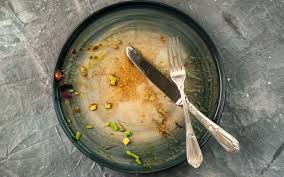
 Food is ephemeral. You taste it, and in moments—sometimes even before the thought of tasting registers—it vanishes, leaving only memory and an empty plate. Unlike a painting that hangs for centuries or a song that can be replayed endlessly, dishes evaporate in seconds, complicating the possibility of reflection or scrutiny.
Traditionally, philosophers have cited this impermanence as a barrier to classifying food as true art. But it is hard to sustain that argument. Jazz, dance, some theatrical performances, and some environmental art also vanish quickly but they still possess structure and pattern worthy of aesthetic admiration.
The argument that food is too brief to be art may say more about our cultural orientation than anything intrinsic to the meal. We rarely study or deeply analyze food as we do books, paintings, or concertos. Our habits frame food as functional, finicky, and too fleeting for serious aesthetic scrutiny. But alternate traditions—such as the Japanese tea ceremony or Chinese and Indian flavor philosophies—treat aroma, taste, and presentation as central aesthetic ingredients, not secondary ones.
This suggests that it’s not ephemerality itself that disqualifies food—it’s our approach to it. In many Western contexts, beauty is equated with permanence and detachment. But that is a cultural prejudice not a philosophical necessity. Whole aesthetic traditions treat impermanence as the very condition of beauty.
The real work, then, must address cultural training. We don’t bring tasting notes to our meals the way a music student brings sheet music to a symphony. We don’t dissect textures or flavor arcs between bites, even though such reflections could yield rich aesthetic insight.
If we adjusted our habits, food’s fleetingness becomes an opportunity—not an obstacle. A well-composed dish shares structure, tension, surprise, and harmony in the short span that it exists. That’s aesthetic density, not deficiency. Because food disappears so quickly, it demands our full attention. Unlike a painting we can return to, a meal requires that we be fully present at the moment.
A dish can contain layers—earthy, acidic, bitter, rich—all condensed into a single bite. Ephemerality underscores the bond between the moment and our emotional response, making the experience feel urgent, alive, and singular
Because food fades, each moment is charged. Think of a fleeting sunset, its beauty heightened precisely because it won’t last. Depth resides in the layers of memory, story, and resonance the perfect bite leaves behind.
 Exploring the Philosophy of Food and Wine