
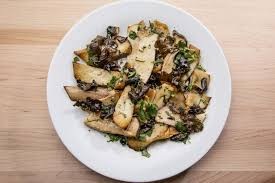
 Umami was once a revelation—an elegant discovery of a fifth taste that illuminated the subtle synergy of fermented soy, aged cheese, and slow-cooked broth. But in today’s kitchen discourse, umami increasingly is not a nuance but a cliché: the default shortcut to “depth,” used so ubiquitously it now flattens difference under the banner of savory saturation.
Discovered in 1908 by Japanese chemist Kikunae Ikeda, umami identified glutamates in dashi as a distinct taste, separate from salt, sweet, sour, and bitter. Initially, this insight enriched our vocabulary for savoriness, especially in Japanese cooking where it was harnessed with restraint and terroir-based subtlety. But as Western home cooks and chefs embraced the concept, umami became shorthand for “culinary sophistication”—and sometimes the only note in the harmony.
Critics argue umami’s rise often manifests in superficial ways. Chefs, food bloggers, and social-media influencers lean heavily on umami-laden elements—roasted mushrooms, miso, Parmesan dust, reduced demi‑glace—not always to balance or enhance complexity but to deliver on-demand cravability. A poignant moment in The New Yorker highlights a chef’s reflection: “Maillard has basically become the new umami … shorthand for ‘I know WTF I’m talking about, bow to me.” Umami becomes performative—less about taste, more about signaling culinary credibility.
This default mode risks anesthetizing our palates. When nearly every vegetable is roasted to starker shades of brown, every sauce reduced to sticky sweetness, savory uniformity emerges: a one‑note symphony masquerading as depth. Umami compounds enhance palatability by boosting other tastes and imparting “mouthwatering” synergy—but when overused, they can smother contrast, acidity, freshness, and more delicate flavor scaffolding.
UK chef Jackson Boxer notes:
‘Umami has become a cliché of modern cooking,’ he says. ‘And to an extent I think a lot of people who are deeply engaged with food are starting to tire of being hit with relentless umami bombs.’
That sentiment applies on our side of the pond as well.
Contrast this with Japanese traditions revealed at the Washoku Symposium. There, chefs describe umami not as a dimension to maximize but a flavor to extract with care—calibrated, balanced, tied inherently to ingredient provenance and process, rather than additives or theatrics, This is umami as art, not trope.
The danger is that umami becomes the only kind of complexity we appreciate. We equate depth with glutamates, texture with crisped browning, richness with fermentation. Meanwhile, gentler flavors—steamed vegetables, iced herbs, light broths—are dismissed as insipid or too subtle. This biases how we taste and how we interpret intention.
The tragedy, then, is not simply that umami is everywhere—but that difference is being flattened in its wake. As savory becomes culinary default, flavors that resist umami’s siren call—bright acid, bitterness, vegetal crispness, floral aroma—are undervalued. We risk a palate-starvation, where nuance that isn’t thickened or caramelized is dismissed as shallow.
That said, umami is not the enemy. Its seductive power is undeniable. But it must regain its former specificity: the fleeting resonance in a delicate dashi consommé or Parmesan wafer in balance with tart acidity. Not the pulverized glutamate stamp that seals every dish.
To critique umami now is an invitation to rediscover contrast—to restore savoriness as one note among many. It’s about recognizing that complexity arises not only from heaviness or fermentation, but from interplay, restraint, and deliberate absence as much as accumulation.
 Exploring the Philosophy of Food and Wine