
 I have great admiration for Andrew Jefford. His columns are invariably insightful, thoughtful, and well written. Or at least that used to be the case. His latest for The New Statesman entitled “Minerality is a Wine Industry Myth” is not up to his usual standards. Perhaps it’s the headline that is misleading. Much of the text is uncontroversial; nothing he writes there demonstrates that minerality is a myth. But the article comes off as a gratuitous, poorly informed swipe at other wine writers. (Authors often don’t write the headline for their articles; perhaps that is the explanation.)
The subtitle of the article is “Tasting Notes Often Rely on misleading metaphors—we’re not really drinking soil soup.” JFC, we had this debate back in the early 2000’s, and I haven’t come across anyone knowledgeable about wine asserting that “minerality” in wine is the result of vines absorbing mineral compounds from soil. Maybe there are some newly minted “influencers” who talk like this but that hardly warrants casting aspersions on any tasting note mentioning minerality. There is nothing wrong with reminding people that you’re not tasting limestone when you drink Pinot Noir but his animus toward the metaphor “minerality” seems driven by something deeper.
He writes:
So why the constant assertions of “minerality”? Most tasting notes are a wild metaphorical fling. Wine doesn’t contain blackcurrants, cherries and vanilla, though its complex chemistry may include substances that might suggest these ingredients. Anyone who farms, gardens or hikes will know that stones and earth have an aromatic personality, especially when worked or rained on – though Maltman points out that what our noses are reacting to is organic matter on those stones or in that earth, not minerals.
“Minerality” might be a metaphor for this embrace. It might also be a way of describing those flavours in wine that don’t evoke fruit itself, or the processes wine undergoes.”
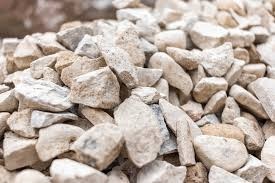
Well, yeah. No kidding. It’s a metaphor. Minerality is a useful metaphor because many aromas and textures in wine remind you of gravel, wet stone, rock quarries, chalk dust, flint strike, the scent of river pebbles after rain, and so on. The point isn’t that these substances are in the wine, any more than we think there are actual gooseberries lurking inside a New Zealand Sauvignon Blanc. The point is that wine, like poetry, music, or memory, summons the world in fragments, echoes, and analogues.
Metaphors are not failed literal references. They are not mistakes to be corrected or inaccuracies to be tut-tutted out of existence by the chemical puritans of wine journalism. Metaphors are instruments of evocation. They direct the mind—not to the object as dissected and demystified—but toward a field of resonance, a terrain of felt association and analogical sparks. A metaphor does not say what is in the reductive, analytic sense; it says what it’s like to be with. It’s a companion to experience, not a schematic for replicating it.
To attack “minerality” because it doesn’t correspond to a periodic table element or identifiable soil compound is to miss the whole point of metaphorical reference. It’s like faulting the phrase “a heavy heart” because no one performed a cardiac weigh-in. Wine metaphors work precisely because they violate the literal—they’re invitations to shift perception, to think of the liquid not as an isolated solution in a glass but as something with lineage, geography, atmosphere, and mood. They’re gestures toward the ineffable textures of experience, toward that dusty quarry path at dusk, toward that cold river stone in your palm.
Contra Jefford’s swipe at other wine writers, “minerality” is not being used arbitrarily at least by people serious about wine communication. This overview by Artisanswiss from a few years back is especially useful in identifying the source of what we call minerality. He writes:
The study Minerality in Wine: Towards the Reality behind the Myths identifies five characteristics in wine that correlate to an enhanced perception of minerality: (1) Acidity; (2) Reductive Phenomena and SO₂; (3) Compounds producing Stony/Smoky Notes (BMT); (4) Compounds Producing Saltiness (succinic acid); and (5) Absence of Fruitiness and/or Wine Flavor.
So let’s not confuse metaphorical richness with epistemological error. A tasting note is not a lab report; it’s a record of encounter. And if “minerality” helps us track the ghost of stone through the topography of taste, then it earns its place in the lexicon—not as pseudoscience, but as poetics.
 Exploring the Philosophy of Food and Wine