
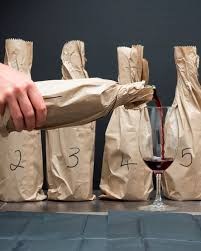
 In wine circles, blind tasting is treated as a kind of moral high ground. You conceal the label, obscure the origin, hide the grape and what remains is presumed to be the wine in its purest form, stripped of reputation, expectation, and bias. It sounds noble: neutral, objective, almost virtuous. But like most ideals of purity, it turns out to be both misleading and impoverishing.
Now I don’t think that blind tasting is worthless. It is useful in contexts where knowing the producer or the price might be misleading. And it’s an important part of learning to taste that one learns to rely on sensation alone. It is one way of testing tasting expertise. The problem is the blind devotion to blindness, the belief that only in darkness do we see clearly.
Tasting after all is not just a matter of sensation, but of attention. And attention is always directed by knowledge, context, and expectation. Without some idea of what to look for, we sometimes miss what’s right in front of us.
For example, tasted blind, many Nebbiolos come across as imbalanced, pale in color yet fiercely tannic, aromatically floral but texturally abrasive. Without knowing the wine’s origin in northern Italy or its capacity to age for decades, it’s easy to judge it as a failure: too light, too rough, and not worth the trouble. But with context, with the expectation of slow unfolding, of tar and roses, of structure before softness, the same wine becomes legible. The pleasure emerges not despite the backstory, but through it.
And then there’s the trap of prior dislike. Suppose someone has decided that Sauvignon Blanc is not their style. It’s too green, too sharp, and too herbal. A blind tasting might seem like the antidote to such bias. But if they pick up the telltale notes of bell pepper and grapefruit mid-taste, the aversion kicks in anyway. The label didn’t do the work; the wine did. Blindness didn’t protect anything, it just delayed the moment of recognition.
But the deeper issue is that objectivity is not typically the goal for most of us. Most of us aren’t judges in a wine competition or critics writing for anonymous masses. We’re drinkers, thinkers, and enthusiasts. We taste for pleasure, memory, or revelation. We don’t want to know only how a wine tastes in a vacuum. We want to know how it fits into the world. Wine is relational. It belongs to a category, a tradition, and a place. Knowing these things doesn’t cloud perception but shapes it. Sometimes the story of the wine helps you notice what’s subtle. Sometimes knowing what region it’s from makes a certain minerality leap into focus. Sometimes the absence of a flavor is the whole point. But you can’t miss what you didn’t know to look for.
So taste blind when the opportunity arises. There is always something to be learned from the process and it will sharpen your senses. But also taste with memory and meaning. Because wine doesn’t reveal itself all at once—and certainly not just because you put a paper bag over the bottle.
 Exploring the Philosophy of Food and Wine