
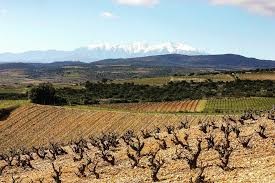
 Before Meininger’s International stopped publishing last week, Robert Joseph, the Devil’s Advocate, published a piece there in which he implored people who sell wine to stop talking about terroir. I neglected to copy the article before it disappeared, so I can’t pull a pithy quote from it. But essentially his argument was that the average wine consumer does not care about terroir, and talking about it just makes their eyes glaze over. He’s not a terroir skeptic. He just thinks it isn’t a selling point.
He’s right about the narrow point, but the advice is wrongheaded.
It’s true that most casual wine drinkers aren’t out there clamoring for a “terroir-driven red with gravelly austerity and a hint of north-facing melancholy.” The average consumer doesn’t care about terroir, because the average consumer doesn’t care about wine talk at all. They want a beverage that tastes good, is priced fairly, and maybe has a nice label. They’re not lingering over a flight of Chenin Blanc from schist, tuffeau, and flinty clay soils, parsing mineral differences like a sommelier with a headlamp and a rock hammer.
The true audience for terroir is the curious, the engaged, the wine-interested, even the mildly wine-intrigued. They’re the ones who, over time, build preferences, buy books, book vineyard visits, and support the wines of place that give wine its depth, mystery, and enduring cultural value. The opposition between “wine geeks” and the average consumer is a false dilemma. There is plenty of terrain in between.
To stop talking about terroir because “normal people” don’t care is to mistake the barroom for the lecture hall and then demand the professor dumb it down. But wine is not mass-market soda. It’s an agricultural product with a backstory, a weather report, and a geological subtext. And for those who do care—writers, sommeliers, importers, collectors, and many, many drinkers who have simply fallen down the rabbit hole—terroir is the difference between wine as a product and wine as a landscape, a narrative, and a fingerprint.
The article’s metaphor—every winemaker “singing the same song” about terroir—is clever but misplaced. When a Burgundy grower tells you about limestone and a Barolo producer talks about calcareous marl, they are not singing the same tune. They’re performing different variations on a theme. Perhaps it is a complex, often overused, sometimes romanticized theme but it gives the wine world its texture and internal logic. Terroir is wine’s key signature. Without it, all you have are beverage notes and a price tag.
Part of what is fascinating about wine is that all those intricate flavors and textures ultimately depend on farming, millions of years of geology, and subtle but persistent shifts in climate and weather. You can’t make that point without talking about terroir. Casual consumers may not care about the details but they care about the larger point, about wines earth and time scripted origin story. Like all effective advertising, that point needs to be hammered home again and again. Without the details there is no way to distinguish vacuous talking points from credible claims.
Perhaps the word itself is off-putting. “Terroir” sounds like a philosophical sneeze or a failed Scrabble challenge. But the concept it points to—that a wine bears the imprint of where and how it was made—is what gives wine its dimensionality. It’s what separates Chianti from Napa Cabernet from Mosel Riesling in a way that isn’t just about grapes or technique but about place. And place matters, not just in wine but in food, art, and culture.
So talk about freshness, texture, and oak. But don’t retire terroir just because a focus group doesn’t list “reflects schist and altitude” as a top purchasing criterion. If wine is to retain its cultural vitality it must continue to speak to those who want more than just something to drink.
Keep singing the terroir song. Some of us are still listening.
 Exploring the Philosophy of Food and Wine