
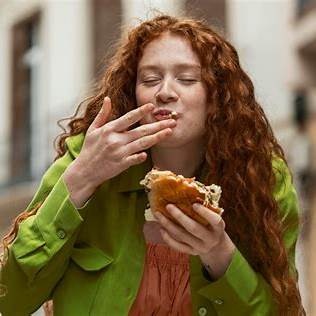
 There’s a peculiar kind of failure that befalls the gastronomic thinker—not a failure of taste, but of attention. It happens, perversely, in the presence of greatness. A dish arrives, glistening with promise, and as it meets the tongue it does exactly what it was built to do: it pleases, seduces, and overwhelms. And then—poof—thought vanishes. Not the salt, not the acid, not even the elusive thread of umami. What disappears is your ability to do your job. You were supposed to analyze the damn thing, and instead you’re sitting there in a blissed-out fugue state whispering “wow” with aioli on your chin.
For anyone writing a book on gastronomy, this is a recurring occupational hazard. You want to think well about what you eat, to distill sensation into concept without killing the flavor in the process. But how to think when the object of study melts the tools of analysis? When pleasure is so intense it basically slaps the notepad out of your hand?
This isn’t just about distraction. It’s about the nature of taste itself. Food, unlike painting or music, tends toward immediacy. It acts on the body before the mind can lace up its boots. And when it’s especially craveable it doesn’t just short-circuit intellect but colonizes attention. You are no longer an aesthetic subject. You are a mouth with a mission.
Let’s call this the deliciousness dilemma: the better the food, the harder it is to think about it. Later, maybe, you can reconstruct the moment. But during the meal? You’re toast.
It’s tempting to blame this on lack of discipline. But that would miss the point. There is something structural about this collapse. Unlike a novel or a film, a dish disappears as it pleases you. It demands to be destroyed in order to be appreciated. And in that destruction, something about aesthetic distance is lost. The dish isn’t over there anymore. It’s inside you, rearranging your neurochemistry.
This collapse of analysis in the face of pleasure is not unique to food. Similar things happen in erotic experience, music, even religious ecstasy (so I’m told). But with food, the threshold is lower. A perfect roast potato can undo years of Kantian rigor.
And yet not all pleasure is equally stupefying. Some dishes provoke thought by resisting you. A funky cheese, a bitter green, a too-tart ceviche—they demand interpretation. They slow you down. Deliciousness, by contrast, is a lubricant. It makes the whole thing go down too smoothly, like reading Hume on a hammock.
So what’s a gastronomic thinker to do? Avoid the best bites? Develop split-level consciousness—rapture below the neck, critique above? Maybe. Or maybe we need to rethink what we mean by analysis altogether.
If we take our cue from Deleuze (who surely would have had opinions about emulsions), analysis might mean not stepping back but plunging in—thinking with the dish, not despite it. Riding the wave of pleasure while tracing its shape.
It’s hard. But it might be the only way to honor the work of food—not by resisting its spell, but by learning to think mid-enchantment, mouthful by mouthful.
 Exploring the Philosophy of Food and Wine