
 Wine consumption in the United States has stalled—if not slid quietly down the hill it once climbed with such aspirational fervor. Analysts point to many culprits: changing demographics, health concerns, the rise of sober curiosity, inflation, the anxiety of choice. But one reason rarely discussed is deceptively simple: wine no longer fits the way we eat.
A recent article by Andrew Sun captures this with subtle precision. The author describes drinking a three-day-old Bordeaux with a humble dinner of steamed rice, stir-fried greens, and takeout Cantonese roast pork. No sommelier would have blessed the pairing. No glossy pairing chart would have sanctioned it. But the wine was still good, the food delicious, and the mismatch entirely untroubling. It was, in the end, a meal—and a pleasant one at that. The anecdote stands not as an act of rebellion, but as a quiet refusal of orthodoxy. Wine was once the centerpiece of an idealized, structured, and codified meal. But the way many Americans eat today is neither structured nor codified—and therein lies the tension. Eating today, as Sun documents, is more about culinary improvisation than following pairing protocols.
The traditional European model of wine appreciation—especially the French paradigm—was tied to a specific rhythm of eating: multiple courses, each calibrated in flavor and texture, often cooked at home or served in a formal restaurant, and consumed with time and ceremony. In this model, wine was not an afterthought but a companion, carefully chosen to complement the trajectory of a meal. Appetizer, entrée, cheese, dessert—each had its vinous counterpart. This was not just a gastronomic structure but a cultural ritual: slow, deliberate, a narrative. Wine’s meaning and prestige were bound up in this ceremonial architecture.
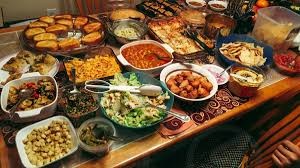
But contemporary American eating patterns—especially in cities—are fragmentary, multicultural, fast, and often improvisational. People graze, snack, order in. Meals are not composed but collaged. Leftover pizza, Korean fried chicken, veggie pho, a taco truck stop, a fridge forage dinner of microwave rice and store-bought kimchi. Wine doesn’t follow us here easily. It presupposes a certain cohesion, a certain predictability of format. But in our current culinary landscape—diverse, irregular, and in many ways creatively rich—wine can feel like the awkward guest at a potluck it doesn’t understand.
As Sun points out:
Chinese cuisine is usually served banquet style, not unlike a Mediterranean family feast, with every dish brought out at the same time at a big round table. The multi-course concept with individual separate pairing is as foreign to Chinese diners as most Italian nonnas, who could care less what varietal grape you match her pasta with, as long as you “mangi, mangi!” a lot!
And he endorses the one “truth” that is reasonably generalizable when it comes to wine and food pairing.
Personally, I find champagne or any kind of sparkling wine to do the job just fine. The palate cleansing effect of the bubbles is also helpful.
Amen, brother.
And it’s not just that we eat differently—it’s that the cultural background of our foodways has changed. America’s demographic makeup has shifted dramatically. Immigrant communities from East Asia, South Asia, the Middle East, Latin America, and Africa bring with them rich culinary traditions—but many of these traditions do not include wine, at least not in the ceremonial, aesthetic role it plays in Europe. Beer, tea, spirits, fruit juices, broths, vinegars—these have long accompanied meals in cultures where wine never became a dietary fixture. And even among Americans of European descent, the foods on the table increasingly come from other traditions. A second-generation Italian-American might now prefer bánh mì to bolognese, or a mezze platter to veal saltimbocca. The rise of food media, the normalization of global fusion, and the ease of international delivery have all decoupled heritage from dinner.
Which leaves wine in an odd position: a ritual beverage without a ritual. It’s not that people dislike wine—it’s that the occasions for wine, the formats in which it thrives, have become rarer. Wine is still tethered to formality, to multi-course dinners and intentional cooking. But most meals today are not so composed. The banquet-style chaos of a Chinese dinner—where duck webs, oyster sauce tofu, stir-fried scallops and roast pork arrive at once—defies the logic of Western pairing. So does the single-bowl lunch, the mezze free-for-all, the post-work mishmash of leftovers and snacks. Wine, elegant and exacting, wants a plot. We’re eating flash fiction.
None of this is to mourn the decline of wine—it may yet adapt, and where there is pleasure, wine can still play a role. But it must stop expecting to be the protagonist. In a culture of grazing, remixing, and improvising, the future of drinking lies not in rigid pairings or terroir-driven taxonomy, but in a renewed humility: wine as one possibility among many, a supporting actor in a scene it no longer writes.
I adore food and wine pairings when done well. But it doesn’t work with any food and it’s silly to force the issue. Plan carefully or take Sun’s advice and improvise with what you have on hand.
 Exploring the Philosophy of Food and Wine