
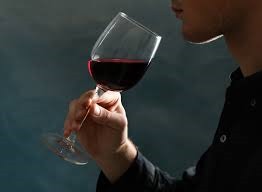
 Almost everyone deeply engaged in wine culture has an aha moment—the instant when wine ceases to be just another beverage and reveals itself as something extraordinary.
For some, it arrives like a sudden electrifying jolt of emotion upon tasting a wine far superior to anything they’ve had before. For others, it is the slow accumulation of smaller disturbances, a gathering storm of experiences that eventually condenses into the realization that wine offers a lifelong journey worth pursuing.
My own aha moment was of the first kind. I had been a casual wine drinker, coasting along without much thought, when a simple glass of Pinot Noir flipped a switch in the brain circuitry. It happened at an Asian “tapas” restaurant, where the spice notes in the food resonated with those in the wine like two tuning forks zinging in perfect harmony. The wine itself—a mid-priced Carneros Pinot Noir from Artesa—was nothing legendary, but in that moment, it might as well have been the nectar of the gods. It was as if a door had swung open to a vast landscape I had never noticed before, and I resolved then and there to keep exploring.
This love of wine is no different from other loves: it is a response to the perception of value. We love something not because we reason our way toward it but because we are drawn to it, captivated by its depth and promise. Love begins when we sense that something is pregnant with possibility, inviting us to step inside and see where it leads.
This idea—that love, in its early stages, rests on perception and sensibility—may seem controversial. But even our most ordinary perceptions are soaked in implicit value judgments. I do not merely see a bus hurtling down the street; I instinctively register whether its motion is benign or threatening, routine or alarming. Such judgments are woven into perception itself, as natural as sensing color or shape. This is even truer of taste. When we eat or drink, we do not neutrally process flavors like a scientist analyzing data—we judge instantly, viscerally: delicious or repulsive, familiar or alien, safe or suspect.
And these judgments are not fixed snapshots; they are alive with expectation. A glass bowl resting on a shelf is not merely there—it harbors a quiet fragility, an ever-present readiness to shatter if disturbed. If the shelf tilts, we do not merely observe the bowl’s movement; we anticipate its fall and reach out instinctively. This sense of latent motion, of things existing on a trajectory of change, is embedded in our perception. We do not just see things as they are; we feel their possibilities pressing forward, urging us to respond.
Love works the same way. Our earliest affinities, which may later deepen into full-blown devotion, arise from this feeling of unfolding potential. A simple object like a bowl on a shelf is unlikely to be loved—it has too few trajectories, too little hidden depths. But some things—people, ideas, practices with some complexity—brim with latent richness. We sense unfinished patterns in them, rhythms not yet complete, and we feel the urge to participate in bringing them to fruition. Love does not come from calculating benefits or tallying up reasons; it emerges from this felt recognition of something waiting to be discovered.
Wine offers precisely this kind of engagement. At first glance, it is nothing more than fermented grape juice. But for those who learn to taste with attention, wine unfurls into an infinite landscape of flavors and textures, shaped by geography, climate, culture, and the artistry of winemakers. It is a living thing, its expressions shifting across vintages, evolving in the glass, forming new symphonies when paired with food. Wine is not a static pleasure; it is a world in motion, an unfolding story in which every bottle is a chapter.
This is the real meaning of quality: not a rigid checklist of virtues, but a set of dispositional properties that promise depth, variety, and transformation. Quality is what lures us in, not because it offers immediate gratification but because it teases with the possibility of more—more nuance, more discovery, more delight. The moment of revelation, the aha experience, is like stepping onto a road that vanishes into the horizon, full of twists and turns but impossible to resist.
And in this way, wine is no different from anything else we love. Every encounter in life—whether with a person, an idea, or a craft—offers a choice: to skim the surface or to dive into its depths. Love, in all its forms, is a response to potential, to the promise of engagement with something not yet fully realized. What we love calls us forward, urging us to participate in its unfolding story. And when we say yes to that call, we do not merely observe life—we inhabit it.
 Exploring the Philosophy of Food and Wine