
 I’ve have recently been re-reading Culinary Artistry by Page and Dornenburg. Published in 1996, this was one of the first English language books to directly address the question of whether food can be art, and it does so from a very practical perspective using chefs’ commentaries on their creative process to generate the account of culinary artistry.
Repeatedly in several sections of the book they refer to the essence of an ingredient or the essence of a dish as the key to understanding dish design.
“The essence of ingredients—which encompasses their appearance, aroma, and texture as well as their flavor—is the starting point of all cuisine. ….Only when you understand and respect the essence of an ingredient can you properly come to enhance its flavor through cooking.”
But what exactly is the essence of an ingredient?
In philosophy, “essence” refers to the properties that make a thing what it is. Thus, presumably, these chefs are referring to the importance of preserving the characteristic flavor of an ingredient when designing a dish.
But is there such a thing?
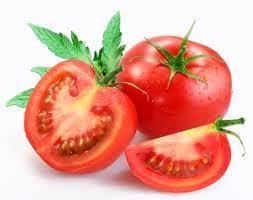
A raw tomato has a distinctive flavor although that flavor differs depending on the variety. Cooked tomato has a flavor clearly related to raw tomato but fundamentally different. Cooked tomato that has been exposed to sufficient heat over time will lose its moisture and begin to caramelize, among other chemical transformations, gaining dimensions not present in the raw or lightly cooked version. Add garlic and we have another transformation. Add ground meat and cook for several hours and the transformation is even more profound. Bolognese sauce is a far cry from a raw tomato. Is the tomato losing its essence, its identity, via these transformations? There is no right answer to this question because there is no clear line of demarcation that marks off the identity of an ingredient or its characteristic flavor.
Of course all of these transformations of a tomato I just mentioned are utterly conventional. We have come to accept them as typical. But that suggests that the “essence” of an ingredient is any flavor mixture causally related to an original ingredient that we happen to enjoy and are thus deemed worthy of repetition.
There is no particular flavor profile that counts as the essence of an ingredient. If there were, dishes by top chefs would all taste the same. Instead, there is a range of live possibilities that can be taken in different directions depending on what diners will accept.
Chefs are constrained not by essences but by habit and convention. To respect the “essence” of an ingredient is to respect how that ingredient is typically handled given current tastes.
 Exploring the Philosophy of Food and Wine