
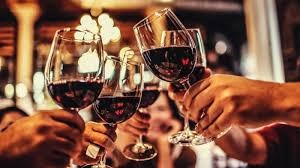
 In the midst of the seemingly declining prospects and sour mood of the wine industry, Eric Asimov pens a righteous paean to the joys of wine and the contributions to culture wine has made throughout its long history. (The article is behind a paywall)
Good wine transports as it refreshes. It’s an invitation to visit other cultures and worlds, to learn about history and geology, agriculture and environmentalism. Aged wine offers a journey through time. It can be a gateway to philosophy and to contemplation….
Wine’s gift is to enhance meals and gatherings. It brings people together, amplifies a sense of well-being and can comfort in times of sadness. Wine can also transfix, captivate and inspire, touching people’s emotions in ways that can range from simple happiness to profound wonder. If they wish, people can discuss and debate the quality and meaning of a profound bottle with language that paradoxically struggles to articulate its mysterious appeal.
He makes one telling remark that has always impressed me as well when I’ve visited the Douro River in Portugal, the Mosel in Germany, or the Rhone in France.
These are ridiculously steep, rocky places where farming was both arduous and terribly dangerous. Vineyards were created on these sites many centuries ago, which required digging out boulders and grading sites to create stone terraces — backbreaking, grueling tasks before mechanization.
Why would people subject themselves to such labors? These choices of vineyard locations may also indicate acute senses of discernment. Centuries later, these sites are recognized as among the best possible places to plant vineyards. It was not simply that wine was necessary. Those people wanted the best wine possible.
The people who tear down wine, including the health authorities who seek a new prohibition, know nothing of this cultural legacy or they choose to ignore it. But this is why I’m relatively confident wine will survive with its reputation intact. This cultural legacy is not easily erased and the reasons for it–the pleasure, good cheer, sociality, and intellectual exploration wine engenders—are not easily replaced.
And if one celebration of wine by a legend is not sufficient, Andrew Jeffords made his own contribution this week pointing to wine’s ability to express emotion, personality, and character. Reacting to the hypothesis of a dinner companion he writes:
Her suggestion, though, was that different wines leave you in different altered states. She was a Champagne enthusiast and maintained that it makes everyone love life and smile, whereas Burgundy and Pinot Noir more generally makes you question the meaning of life and doesn’t let go until you confess.
Hmmm: Champagne—bright and spirited; Burgundy—deep thoughts, reflection, self-examination….Maybe different wines do possess different emotional watermarks; maybe each has a psychological as well as a sensual architecture. The altered states they offer are variously lit; the wines take you on different journeys.
Jeffords and his dinner companion are right. I devoted an entire chapter to this dimension of wine in Beauty and the Yeast. Here is a brief excerpt.
Some wines make us feel as if we are floating or being caressed. Others whipsaw with kinetic energy or attack with angular momentum. Aggressive wines are not just perceived as aggressive but are felt that way—we steel ourselves to appreciate them, are irritated by them but feel richly satisfied when they achieve resolution. Wines that are heavy, dense, and mysterious are not only perceived as brooding but are felt to induce reflection on something that seems vaguely menacing, although there is nothing menacing in our environment. By contrast, wines that are bright, fresh, and lively induce a sense of ebullience and light-heartedness. Based on these pre-cognitive appraisals and physiological responses, we judge a wine to be angry or joyful or to express a more complex array of emotions, just as a piece of music might embody several emotions.
If a rectangular canvas splashed with paint and lines can express freedom or joy, why not liquid poetry?
 Exploring the Philosophy of Food and Wine