
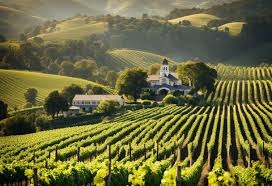
 I remember my first extended trip to Napa, about 20 years ago, in which I had the opportunity to taste many Cabernets at a variety of price points. I came away thinking I had tasted some excellent wines but, within a given price range, they all seemed to taste the same. I chalked it up to my own inexperience. But I have returned several times and with a few notable exceptions—Corison, Ramey to name two off the top of my head—I still have the same reaction. Homogeneity is a problem.
Of course, I’m not the first one to note that. But now that opinion has been reinforced by Karen MacNeil, the highly regarded author of The Wine Bible and someone who routinely writes about Napa wines.
W. Blake Gray at Wine Searcher writes:
MacNeil stirred up a spirited conversation last month when, after attending a tasting of high-end Cabs which Philippe Melka either makes or consults on, she posted on Facebook: “All of these wineries employ the consultant Philippe Melka. All of these wineries make plush, soft, well-structured, very expensive Napa Valley Cabernet Sauvignon. Is it a problem if many of them taste largely the same?”
These were pricey wines costing hundreds of dollars per bottle and from a variety of Napa’s 16 AVA’s. Yet they prompted MacNeil to ask whether terroir matters in Napa.
In a subsequent interview MacNeil said:
“These wines are the antithesis of what wine is supposed to be about,” MacNeil said. “You think of the Matt Kramer term, ‘somewhereness.’ These wines are like nowhereness. They were in a nowhere cloud of similarity. I don’t know why you would spend a fortune on a bit of Napa Valley ground. Half a million dollars an acre. And spend a fortune on consultants, to get a wine that tastes like a wine 10 miles away. Greatness begins with distinctiveness.”
I couldn’t agree more. I drink wine because of the differentiation. It is what makes wine more interesting than other alcoholic beverages one might drink.
But alas I think we difference hounds are in the minority. The fact is, these wines command astronomical prices because people want them. I wonder whether the average consumer of fine wine cares much about differentiation. The evidence suggests they don’t.
MacNeil worries that homogenization is a threat to the wine industry. I have long thought so as well. I do think there are enough of us out there who care about differentiation that the industry can’t afford to lose us. But we may be in the minority.
 Exploring the Philosophy of Food and Wine
So true. I have basically given up on almost all Cabernet Sauvignons from California. Too much color; too much alcohol; too much oak; too much r.s. etc., BUT most of the people whom I know adore these behemoths. Bigger is better is very American. I like that a wine can :kiss” me, and not “kick” me.
Perhaps, it comes from the American whiskey/Bourbon culture that a wine has to knock you over? Perhaps, the cocktail culture where sweetness is enjoyed. I am g;ad that people are enjoying wine, but the more that it tastes the same is not truly about understanding wine. For the past couple of years, I have been a sommelier at an Italian restaurant with a 100% Italian list, and practically no French / International varieties. The complete bewilderment on people’s faces when they ask for a “Cab”, and are told that we don’t carry any, tells me so much about the difference between wine drinkers and “Cali Cab” drinkers. To me, ordering a “Cab” from a list is similar to ordering “steak’ everywhere that one goes. Being “safe” is better than being adventurous.
Yes I really does come down to being reluctant to take a chance. But developing a different sensibility requires some effort as well.
Dwight,
Intensity of color, aroma and flavor, combined with a rich and ripe, varnished texture are the lingering effects of Robert M Packer’s dominance. When, if ever, will it change?
Tom Barras
Hi Tom,
There are some exceptions but I doubt wholesale change is in their future. They have been successful doing what they’re doing.
20 yrs ago only … I started making wine in the Napa Valley 44 yrs ago .. and has it not ever been the case ! Winemaking technique and barrels are heavy tools compared to the subtleties of nature !
Indeed they are. The new oak is the problem.
Some good facts around cutting 200 yr oak trees and wastage of this in a recent article in WBM on oak supplements . My own visit to a stave mill in the Vosges last year drove home the wastage factor . Ever wondered why oak bark/ tannin is used to tan leather .. then think about your intestine !