
 First the good news. This post by Sarah Heller (MW) at Club Oenologique about how Barolo and Barbaresco have adapted to climate change paints a generally favorable picture of the present and near future.
In Barolo and Barbaresco, it is generally agreed that the first two decades of the 21st century brought reliably stronger vintages than the preceding two or three and – thanks to varied, intricate topography – some sites were poised to benefit from gradual warming.
Wines from recent vintages tend to be more drinkable when young, formerly marginal sites used primarily for blending are now benefiting from increasing ripeness, and the use of irrigation and sophisticated canopy management have mitigated the effects of drought.
Even the unrelenting heat of 2022 turned out to be favorable:
Gaia Gaja of Gaja wines says 2022’s heat and drought were very concerning – especially as their old vines on west-facing sites put out tiny leaves that barely provided any shade. To their surprise, quality was excellent – possibly because shut-down vines preserved high acidity and ultra-thick skins protected the berries while creating formidable tannins – leaving her (and us) with hope that, though styles might shift, the future need not necessarily be one of reduced quality.
The hilltop villages of Piemonte are among the most charming in the wine world and their wines among the most distinctive. With the unrelenting, recent bad news about the prospects of wine, it’s good to hear that some regions are flourishing.
That makes it a bit easier to stomach the bad news.
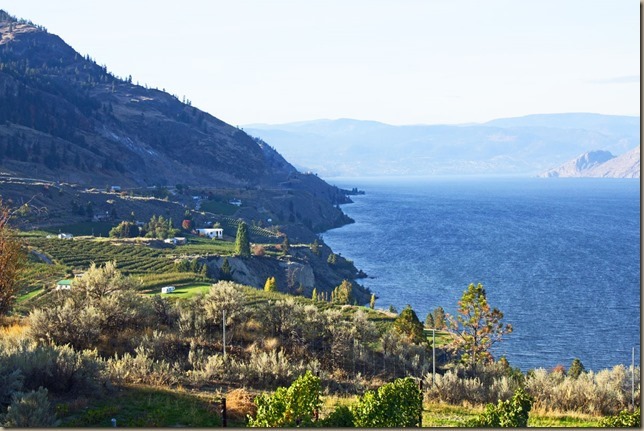
When I was travelling throughout North America and Europe visiting wine regions, I found places such as the Okanagan Valley in British Columbia the most interesting. These are emerging wine regions just beginning to make wines of superior quality. The spirit of adventure was palpable, pride in their accomplishments infectious, and they were very welcoming to new visitors tasting their wines for the first time. Not to mention the place is gorgeous and some of the wines were quite good.
I am deeply saddened by the news that the whole region may be threatened.
Several consecutive days of sub-zero temperatures have basically destroyed this year’s crop:
The valley’s vines experienced widespread damage. A majority of Okanagan wineries lost both secondary buds (which most often emerge after the primary has been killed) as well as tertiary buds (the backup to the backup). Hopes are low for this year’s harvest and overall health of the vines.
“It was lethal,” says Val Tait, winemaker at Gold Hill in the Oliver Osoyoos region of the Okanagan. “I’m hearing 100% bud loss throughout the valley.”
Last year they they lost 54% of their crop due to cold weather. That on top of devastating wild fires, a dramatic decline in tourism which never really recovered from Covid, and the general loss of interest in wine from younger generations.
As of January, 25% of the valley’s wineries are for sale—prompting many to wonder if the oft-cited “up and coming” wine region [can] weather this series of recent storms?
There is some optimism at the end of the article but the overall picture is grim.
We spent two lovely weeks in Kelowna in 2018. This is a shame.
 Exploring the Philosophy of Food and Wine