
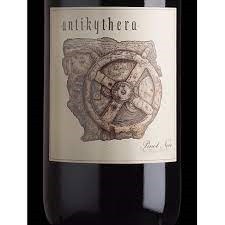
 I know writers at the NY Times typically don’t write their own headlines so we probably shouldn’t blame Alex Halberstadt, but this headline “Maggie Harrison’s War on Wine” is absurd. The fact that someone thought this idea was intelligible tells you more about ideologies than about Harrison’s approach to winemaking.
I have visited Maggie Harrison’s Willamette Valley winery Antica Terra. The wines and the tasting experience were exactly as recounted in the article—extraordinary.
The headline refers to her unusual blending process.
In her pursuit of maximally beautiful wines, Harrison has devised possibly the world’s most laborious way of making them. Over the course of about 10 days, she, Mimi Adams (her associate winemaker) and her friend Nate Ready, an owner of Hiyu Wine Farm in Hood River, Ore., sit around a table and taste as many as 150 unlabeled samples, each representing a barrel and identified by only a number, incessantly combining them, Harrison says, “like little meth addicts.”… Harrison believes that blending blind is the only way of dispensing with bias — her grapes come from eight of the top vineyards in the Willamette Valley, including her own, and two more in California, and she told me that being aware of a wine’s origins would influence her sensory experience. The combinations result most often in failure, but they allow the tasters to gradually feel their way toward the final blends.
Furthermore, Harrison has “grapheme form synesthesia.” Letters and numbers are associated with colors.
As she tastes her way around the bottled samples, her brain turns every number into a distinct, vibrant color, until the wines in front of her become a palette of umbers, oranges and Prussian blues that she combines into a final composition that aspires to what she describes as “emotional transparency” and a “perfect tension between intensity and levity.” Her synesthesia allows her to hold this overwhelming amount of sensory data in her mind as a palette of color, “keeping it in the sensory realm,” she told me, “without having to translate it into language.”
This is a fascinating although unusual approach to blending but it clearly works. So why is it a “war on wine? Halberstradt writes:
Her process violates one of the central tenets of her craft: terroir.
Well not really. You can’t consistently get distinctive blends without distinctive grapes. However, It is true that the taste signature of each vineyard is lost when blending wine from so many lots. But that is true of countless high quality wines that are blends of grapes from several vineyards.
No doubt Harrison carries blending to an extreme and in fact she doesn’t believe in terroir:
“Terroir is a myth,” Harrison told me. She considers wine, like art, to be “cultural, not natural,” and she doesn’t see herself solely as a servant of the natural world. It’s not that Harrison doesn’t recognize the importance of the land. She just doesn’t believe that great vineyards magically create great wines. For her, wine is an entirely human undertaking requiring intense effort and artistic commitment. Blending frees her from the limitations imposed by particular vineyards, grape varieties and climatic downturns, allowing her to rely instead on intuition and aesthetic vision, an approach that results in wines that are more distinctive and sometimes stranger than just about anyone else’s.
Here is my point about ideologies. We love to categorize, and we love our distinctions and definitions to be precise with no ambiguity. And so in the past 25 years we’ve come to believe that distinctiveness in wine comes primarily from a well-cared for, distinctive vineyard site. Truth be told, that is true more often than not. Harrison has an extraordinary talent for blending. Most winemakers don’t; a hand’s off approach works well for them.
But why should it be necessary to choose? Why must there be one way of making wine? The distinctiveness and diversity of terroir-driven wines has been demonstrated time and again.
Harrison shows there is another way to make distinctive wines. The wine world is better off because of it. When we become so locked-in to an idea that it becomes a platitude you can be sure it’s losing its capacity to be productive.
It’s time for more winemakers to look to blending as a source of distinction.
 Exploring the Philosophy of Food and Wine
We should point out that some of the greatest wines in the the world are blends of various vineyards, from tete de cuvee Champagnes to Vintage Ports to Grange. Making a wine along similar lines somehow falls short of declaring war. In fact, Harrison’s blending session was quite reminiscent the same process in a sparkling wine house.
And did anyone else notice that when Maggie Harrison offered a wine to start the tasting, it was a grower Champagne–one made from a single vineyard, and described by the author (not Harrison) as more interesting than blended Champagnes?
OK Fine.