
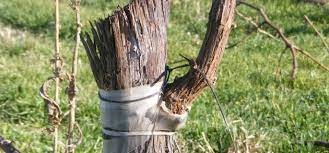
 Wineries will do anything to gain an edge including manufacturing quality factors out of thin air. Apparently the new “it” innovation in wine is ungrafted vines. Jamie Goode reports:
There’s a new organization in the world of fine wine. It looks a bit like an elite members club from a distance, with a roll call of some of the great and good of the wine world. Called les ‘Francs de Pied’, this producer organization joins together those who are working with ungrafted vines, although there’s a caveat here: its membership is so far only European, because these ungrafted vines have to be native varieties in their place of origin.
The practice of grafting vines onto phylloxera-resistant American rootstock was introduced in the 19th Century when that pest threatened Europe’s vineyards. Most wine regions in the world are prone to phylloxera and thus use grafted vines.The problem is there is no evidence that ungrafted vines produce better grapes.
Where it becomes a little problematic is when assertions about ungrafted vines being better in some way than grafted vines, and the suggestion that if a vine is grafted that something has been lost. The science here doesn’t necessarily stack up….If the graft union is good, then the vine will perform just as well as an ungrafted one. To talk of the ‘filtering’ effect of the graft union is fanciful. All the vine is receiving from the rootstock is water and mineral ions, and if the conductive tissue is functioning, then this will not be affected. The growth pattern of the roots will affect this, and the roots will also be signalling by way of hormones to the above-ground portion of the plant. But there is no evidence that American hybrid roots do this any better or worse than vinifera roots.
As Jamie points out, Chile has never had a problem with phylloxera so they have mostly ungrafted vines. So does Washington State, Argentina, and Southern Australia. There is no evidence their grapes are superior to those of other regions with grafted vines. Frankly, it’s short-sighted and dangerous to encourage vineyards to use ungrafted vines if they are in a region where pylloxera can gain a foothold. It’s not cheap to have to rip out a vineyard and replant.
It’s great that producers want to keep very old ungrafted vineyards alive, and it’s nice that they have a club, but please let’s keep science central in the mix here.
That’s a pretty thought but people will believe any myth if there is money to be made from it.
 Exploring the Philosophy of Food and Wine
This doesn’t strike me as any more egregious than claims you can taste the minerals in the soil that somehow end up in the finished glass of wine (clearly and easily disproved by research.) And this is just as easy to test, with side by side comparisons, should anyone be so motivated.
But the wine business isn’t generally motivated by a desire for scientific proof of much of anything.