
 Food is many things. Here is a list (probably incomplete) of many things food is:
- Food is nutrition and fuel. As such, it has objective properties, subject to scientific investigation and precise measurement, that are not open to interpretation.
- Food is nature and part of a system of interdependent ecological relationships. Or I should say some food is natural. By contrast, some food is a wholly industrial product. According to contemporary norms, food is good when it comes from nature and bad when it doesn’t.
- Food is culture. It has social meaning and significance, and expresses various cultural phenomena including prohibitions and permissions. Each culture determines what is permissible to eat and when. There are appropriate and inappropriate foods, everyday foods, foods for celebration, and symbolic foods. Culture defines food and food defines culture.
- Food is a social good. The distribution of food is a matter of social justice. It is something everyone needs and thus cannot be entirely a matter of individual choice.
- Food is an object of desire. The desire to mitigate hunger is powerful but food is also a source of cravings that are not related to hunger, many of which are deeply influenced by social and economic forces.
- Food is an aesthetic object. It appeals to the senses and is a source of pleasure and satisfaction. And food is like an art in that we attribute aesthetic properties to food. Dishes can be elegant or possess unity, flavors can be delicate, rich, or bold, etc.
- Food is a commodity an economic good with market value
Each of these can be the object of study of a specific discipline. Nutritionists, sociologists, psychologists, economists, biologists, and many others contribute to our understanding of food. However, all these various things that food can be intersect in complex ways. Food as an object of desire is related to food as an aesthetic object and both are dependent on factors arising from food as a commodity, food as a part of nature, or food as a cultural phenomenon,
To understand these interconnections food has to be look at holistically.
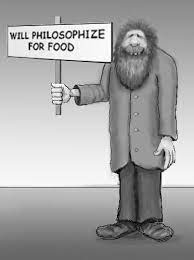
What discipline can look at food holistically and grasp the intersection of all this complexity? That would be philosophy. Other disciplines have the technical expertise to study each feature independently. Only philosophy has the scope and synthetic “glue,” what we might call integrative world-making, that enables us to put complex, distinctively different inquiries under one roof.
 Exploring the Philosophy of Food and Wine