
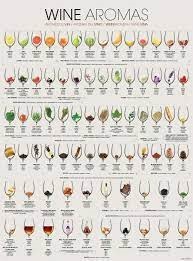
 Meg Maker at Terroir Review has an interesting post that dovetails with my post from earlier this week on the cultural challenges to growing the wine industry.
Her post was about a panel discussion about wine language and the need for it to change:
First, the vocabulary is Eurocentric, reliant on metaphors and analogies that may be unfamiliar to swaths of the global audience. It’s often deployed to make absolute pronouncements, framing a subjective experience as objective truth. The emphasis on finished product versus origins and process can make it seem like what’s in the bottle is all that matters….The overall effect is gatekeeping to new wine drinkers (and, for that matter, new wine professionals), alienating them at a time when the industry tries to address its shrinking footprint.
As I pointed out in my earlier post, the millennial generation is much more diverse than the boomer generation. Many Americans of this generation didn’t grow up in a culture oriented toward European tastes. Wine culture doesn’t feel like it belongs to them, and Meg is right to point to the issue of language as one of the impediments. The terms we use to describe wine presuppose familiarity with European or American plants and agricultural products and metaphors drawn from western culture.
Now think about someone studying wine in Chennai or Lima or Bangkok. Straight translation fails those who have no experience with gooseberry, or black currant or red cherry or any of the long list of European plants and fruits and concepts on these lists. Studying them in non-European places, and even many European and North American places, requires mental gymnastics.
Meg’s post doesn’t offer a solution. (It was drawn from her remarks opening the panel discussion. Perhaps the discussion itself produced some ideas.)
We can try to open up the lexicon to new vocabularies but if they are drawn from non-Western experiences they will be puzzling to people from Western cultures. There is no universal language.
In the end, I think there is only one solution. We need more diversity in public-facing positions in the wine industry. If we are to learn a new vocabulary that is less euro-centric, we will need people in a position to show us how to speak that language and conceptualize wine from a different point of view. After all, the small but growing population of wine lovers and professionals who grew up in non-Western cultures have had to learn “winespeak” from us. We can and should be learning from them if we want to expand the appeal of wine to new generations.
If the industry won’t do it out of fairness, do it out of self-interest. These cultural issues are the main reason why wine is struggling to appeal to younger generations.
 Exploring the Philosophy of Food and Wine
I’m enjoying this topic. What I find interesting, as an euro-centric, middle-aged, white male, is that I don’t relate to all of the wine descriptors in general use: guava, lychee, Asian five spice, Mayer lemon (as opposed to the store-bought lemons I have access to?), garrigue. I know there are more… When I took an Indian cooking course, I had to learn about new foods, spices, and flavours. When I studied traditional Japanese art, I had to take onboard elements of a new design langauge. Why would it be different for people coming to the wine world? So many descriptors are already tropical. Several are Asian. In my reading, wine writers continue to look for new ways to describe wine (which are “foreign” to me). Not to be a grumpy old guy (I appreciate the value of diversity and making space for everyone), but wine is predominately, historically, a Euro-centric endeavour. Why not just celebrate that and focus on good pedagogy?
Hi Greg,
I get where you’re coming from. But one of the great controversies in the wine world at the moment is how to get more people interested in wine, and one plausible explanation for why wine is struggling with younger consumers has to do with cultural barriers one of which is language.