
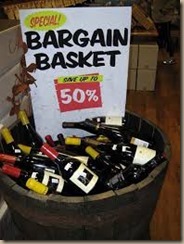
 Blake Gray is disappointed in the cheap wine he finds on the market these days:
For under $10, you can expect a bottle of wine that tastes like fruit not found in nature. It won’t be spoiled or oxidized. There will be nothing wrong with it. But it will be so boring you could fall asleep and face-plant into the glass.
I agree. I review budget wines once per week and it is the rare occasion when I find something interesting at that price level. In days past it wasn’t so. Even 10 years ago, you could be surprised by the quality of a cheap bottle. But, on the downside, it was always a crap shoot. Sometimes a bottle was undrinkable and most of it was just barely tolerable. But there were gems to be found if you knew where to look. Today, thanks to new technologies, the general level of quality has significantly improved. I rarely have to pour a bottle down the drain and most cheap wine is properly made. But there is, too often, nothing distinctive about it. The rough edges have been rounded off making most of it inoffensive but innocuous and generic.
The culprit is wine industry consolidation. According to research released in 2012, three firms—E & J Gallo Winery, The Wine Group, and Constellation Brands—accounted for more than half of U.S. wine sales. All those brands you see on the supermarket shelf are a marketing illusion—different labels owned by the same parent company. Large companies tend to produce a generic, standardized product appealing to the “average” consumer.
Gray goes on to ask if it matters, especially when beer and cider are getting interesting and can be had for under $10:
The question is, should we care? Does it matter? It’s not hurting Big Wine Business; Gallo is thriving, not suffering, in the new environment. And I’m not sure it hurts smaller producers to have more people recognize that they have to spend $15 or more for a bottle of wine.
I think it does matter. I would guess most wine lovers started out drinking inexpensive wines—when you are young that is all you can afford. It is that occasional gem that convinced us to trade up to increase our odds of getting something special. If those gems are less available the opportunities to turn the occasional wine consumer into a wine lover will be diminished—to the craft beer brewer’s benefit.
Craft beer is a threat to the wine industry because the wine industry has gone corporate.
All the more reason to drink local wines, or wines from independent producers. The problem is that small producers struggle to make wine that can be sold for under $10. It takes a large producer to make money on a small margin.
So the world has changed. Gem hunting is more expensive today but less likely to cause you to wretch.
Is that a good trade-off?
 Exploring the Philosophy of Food and Wine
I don’t know much about the American wine market, but in Germany/Italy you can find a good bottle of wine, especially white wine, for €10.
“Everyday wine” should not be that expensive in my opinion. If those inexpensive “everyday wines” suddenly become expensive then on the long run the wine market will lose customers. But that’s just my opinion 🙂
Cheers!
Hi vinoinlove. Thanks for your comment. In the U.S. you can easily find a good bottle for under $10 if by “good” we mean competently made. The problem is they tend to be very similar–fruity with a hint of sweetness, soft tannins, enough acidity to be refreshing. But nothing very distinctive.
I know nothing about purchasing wines in supermarkets in Italy or Germany. In my travels in both countries I was fascinated by distinctive regional differences in local wines that often sold for less than 10 euros, even in restaurants. In the U.S we have interesting regional differences as well but small production, local wines tend to be a bit more expensive.