
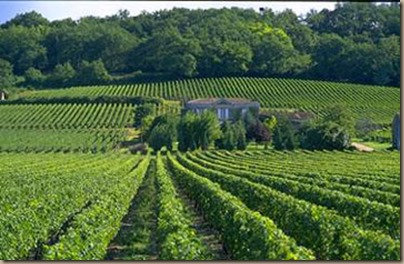
 It just may be that the most storied wines in the history of civilization are about to take a tragic fall worthy of Shakespeare. I”m no Shakespeare so you will have to settle for what follows.
The wines in question are produced by the top Chateaux in Bordeaux—the highest ranked in the various classification schemes that rate producer quality. Most of these Chateaux have been making wine for centuries so their product has a long and well-documented track record of quality and the ability to age—many will improve in the bottle over 20 years and will remain stable for 50 years. These are the wines that fetch over $1000 per bottle when released and may triple in price over the next few decades, at least for the good vintages.
These are wines that you and I will never taste.
Given this track record, these are also the wines that most investors are interested in. They buy them in large quantities and store them until the price goes up. And the price will go up for basic economic reasons—as the wines age they improve in quality. People want them. Demand goes up. But as they are purchased and consumed, the supply goes down since there is a fixed quantity produced. So the price rises as supply shrinks.
A sound investment, no? But even if you have an extra wad of Ben Franklins in your wallet you can’t just go to the winery and purchase these wines. The Bordelaise have develop a system that guarantees a healthy profit without having to do much marketing. It’s called the En Primeur system. Every spring, after the wines have been fermented and stabilized and put in barrels, wine brokers, importers, and wine critics are invited to taste the wines many months before they will be bottled and released. The wines are evaluated, then the wineries set the price, and the brokers and importers who have established relationships with the wineries purchase “wine futures”, i.e. agreements to purchase at a particular price when the wines are bottled.
How do the brokers know which wines to buy? When tasting they have to evaluate and predict how the wine will develop in the bottle. In recent years, wine critics such as Robert Parker have played an increasingly important role in this process. They publish their scores which drives the market. The highest scoring wines will bring the highest prices over the next 3-4 decades.
You don’t have to be an FBI agent to imagine how this whole system might be gamed. There have long been suspicions that wineries were preparing “special samples” to be tasted during En Primeur week. And just this past week we have confirmation. The Drinks Business published an article in which a consultant for many of the top Chateaux admits that the practice of doctoring wines to make them more appealing and accessible during En Primeur week is widespread.
Outlining an objective to “end up with something quite controlled and with the identity of the property,” Derenoncourt explained: “Our method is to remove a bit of each distinct parcel and to put them through a special preparation to speed up the elevage.
“Therefore we put them into barrel earlier than the others, straight after the running off in fact, so that the marriage between the wines and the wood may happen more naturally than if we were to put the wines through that at a later date.”
Summing up the end result, Derenoncourt remarked: “In a sense, we have some little dolls in the cellar which are representative of the harvest, but which are extremely well prepared for primeurs week.”
I would sum this up in a different way. This is fraud, pure and simple. The wines evaluated by critics and brokers are not the wines the public will buy. Yet millions of dollars of investment and purchasing decisions are based on these evaluations. It should call the whole en primeur process into question.
As Tom Wark wrote on his blog in response to this article:
…the only question that remains is how the trade will react to the evidence that they are being purposefully deceived by Bordeaux vintners? A fraud is only as useful as there is a willingness to be deceived.
I suspect many in the business will try to shrug this off. As Upton Sinclair said, “It is difficult to get a man to understand something, when his salary depends upon his not understanding it!”
But this, along with the tendency of the Bordeaux houses to set their prices too high, may spark the unwinding of the futures market.
Follow @DwightFurrow
 Exploring the Philosophy of Food and Wine