
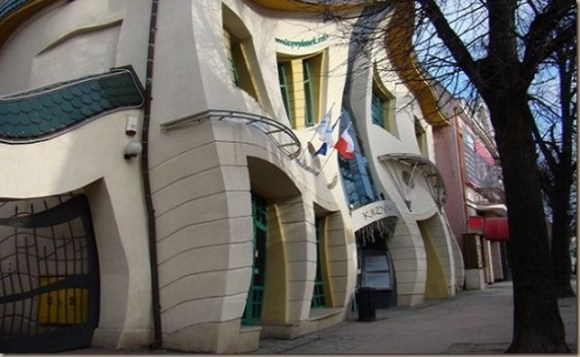
from Archi Texts
One of the most widely held intuitions about the differences between the fine arts and crafts is that genuine works of fine art cannot be used for anything other than aesthetic appreciation. When we attend to a painting as the source of a genuine aesthetic experience, the painting’s value as a commodity, the appropriateness of its color scheme as a wall hanging for one’s apartment, or its value as a doorstop are irrelevant. Art objects should not be useful for anything aside from aesthetic appreciation. They have what philosophers call “intrinsic value”. They are not valued for anything other than their aesthetic qualities.
This is in contrast to craftwork which, regardless of its aesthetic properties, is designed to serve some purpose. Furniture, quilts, pottery, and clothing are intended to serve a variety of functions; thus, they are not works of art even if they are attractive and pleasing. Since the primary function of food is to give us energy and nutrition, the preparation of food seems clearly to fall under the category of a craft. It has instrumental value.
The motivation for this distinction between fine arts and crafts comes from Kant who worried that if we took an interest in an object’s function we would not be objective about evaluating its aesthetic quality. If we desire an object because it is useful or valuable our judgment will not be “disinterested”. (See here for more discussion of Kant’s view)
But this reasoning that disqualifies useful objects from being art rests on a mistake.
The fact that something has instrumental value does not logically preclude it from having intrinsic value as well. A piece of pottery may be useful for holding liquid, but its usefulness as a container need not enter into my judgment regarding its aesthetic value. In fact, the argument seems to be applied selectively. Architecture has long been considered a fine art despite its obvious connection to the function of buildings. Until roughly the 18th Century, people did not sit raptly before a group of musicians contemplating sounds as aesthetic objects only. Music has always played a functional role within ceremonies or as a stimulus for dancing or socializing. Today, arguably, music is primarily used as a mood regulator or as background to provide atmosphere. Yet, the fact that music and architecture are useful for some purpose does not prevent them from being enjoyed as aesthetic objects under the appropriate conditions.
Why should food be different? No doubt we sometimes eat because we’re hungry; and hunger may unduly influence our judgments about flavor. But once we are no longer ravenous there is no reason to think judgments about flavors will be distorted or lack objectivity. We can then focus on aesthetic properties just as we can enjoy the beauty of a building without worrying about whether it will withstand earthquakes. We do not practice the culture of the table merely in order to relieve our hunger. Kant got this wrong.
So food and wine experiences can have intrinsic value—they are valuable in themselves, not because of some additional purpose they serve. But the issue is what kind of intrinsic value they have. Is a good meal valuable in the way a warming sun or a massage are valuable—as momentary sources of sensory pleasure. Or is the satisfaction we get from food and wine of a more profound sort more closely associated with art?
I argued in a recent post that food and wine produce pleasure by stimulating the imagination in the just the way works of art do. But I think the intrinsic value of art and food go beyond the merely contemplative domain in which classical aesthetics usually operates. Art (and I include the edible arts in this category) involves a particular, intrinsically valuable way of engaging with reality—an invitation to shape reality that ties us to physical objects.
But I need to think more about this. I’ll have more to say about this in future posts.
.
 Exploring the Philosophy of Food and Wine